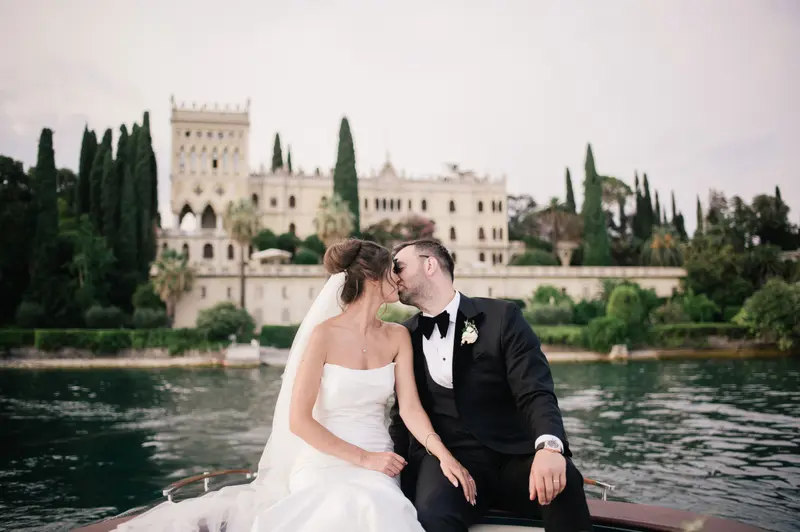
The approach begins on water. The boat cuts across Lake Como and turns toward a wooded promontory where the land narrows and lifts, just enough to hold a structure that seems placed rather than built. Villa del Balbianello does not reveal itself immediately. You see the trees first, then the line of the terrace, then the loggia, positioned with a kind of quiet certainty above the lake. There is no frontage in the conventional sense. No formal arrival by road. The property is understood only as you draw closer, the water acting as both approach and distance.
The villa sits at the tip of the Lavedo peninsula, a position that isolates it without disconnecting it. Across the lake, the landscape holds its depth. The mountains remain present but do not dominate. Light moves across the surface in long, slow shifts, reflecting upward rather than falling downward. From the terraces, the view does not frame the lake. It extends into it. There is a sense that the property belongs to the water as much as the land, each defining the other without competition.
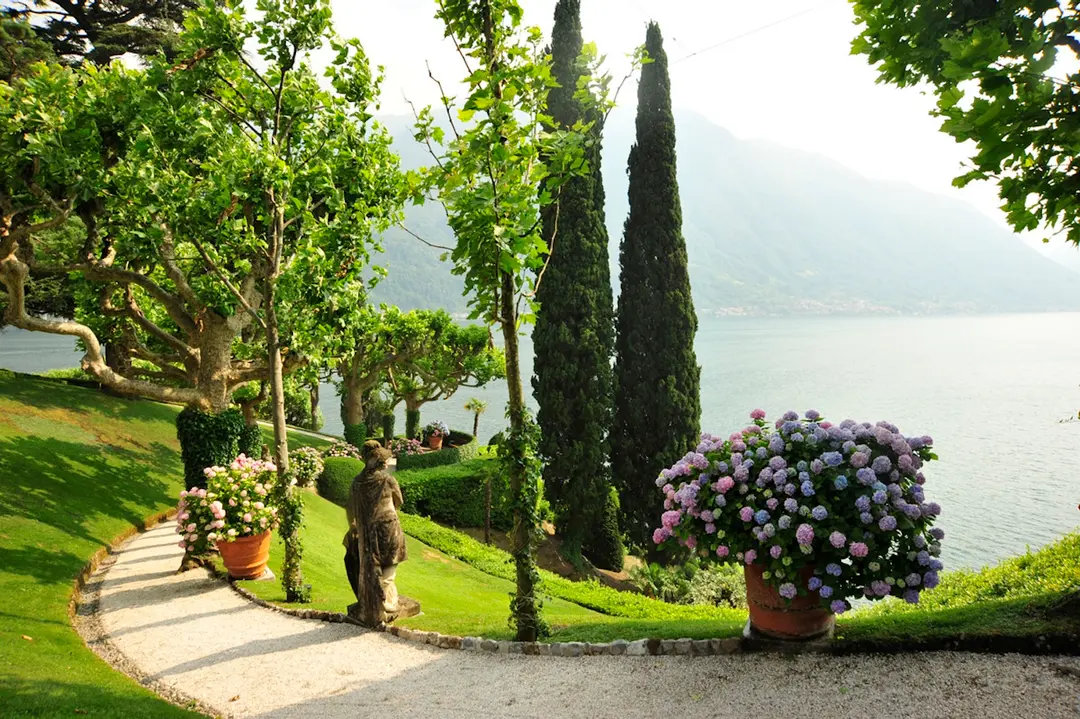
The gardens run to the water on both sides of the Lavedo peninsula. (Villa del Balbianello / FAI)
Its origins trace back to the late eighteenth century, when Cardinal Angelo Maria Durini commissioned the initial structure on the site of a former monastery. The intention was not permanence in the modern sense, but retreat. A place positioned at the edge, both physically and intellectually. Over time, the villa passed through private hands, each owner adding without overreaching. The most significant transformation came in the twentieth century under Guido Monzino, who reshaped the interiors with the same discipline that governs the exterior. His collections, travel artefacts, and maps remain embedded within the rooms, not displayed as exhibition but integrated into the structure of the house.
Architecture here is defined by proportion rather than scale. The loggia, with its repeated arches, establishes a rhythm that carries across the property. Climbing greenery softens the edges without obscuring them. Stone paths move upward through the gardens in a sequence that feels inevitable rather than designed. Every element appears resolved, as though adjustment would disrupt rather than improve.
The gardens themselves are not expansive in the way some estates choose to be. They are controlled, shaped, and held within clear boundaries. Terraces step toward the water, each one offering a slightly altered perspective. Trees are positioned with intent, framing views rather than filling space. The overall effect is not abundance, but precision.
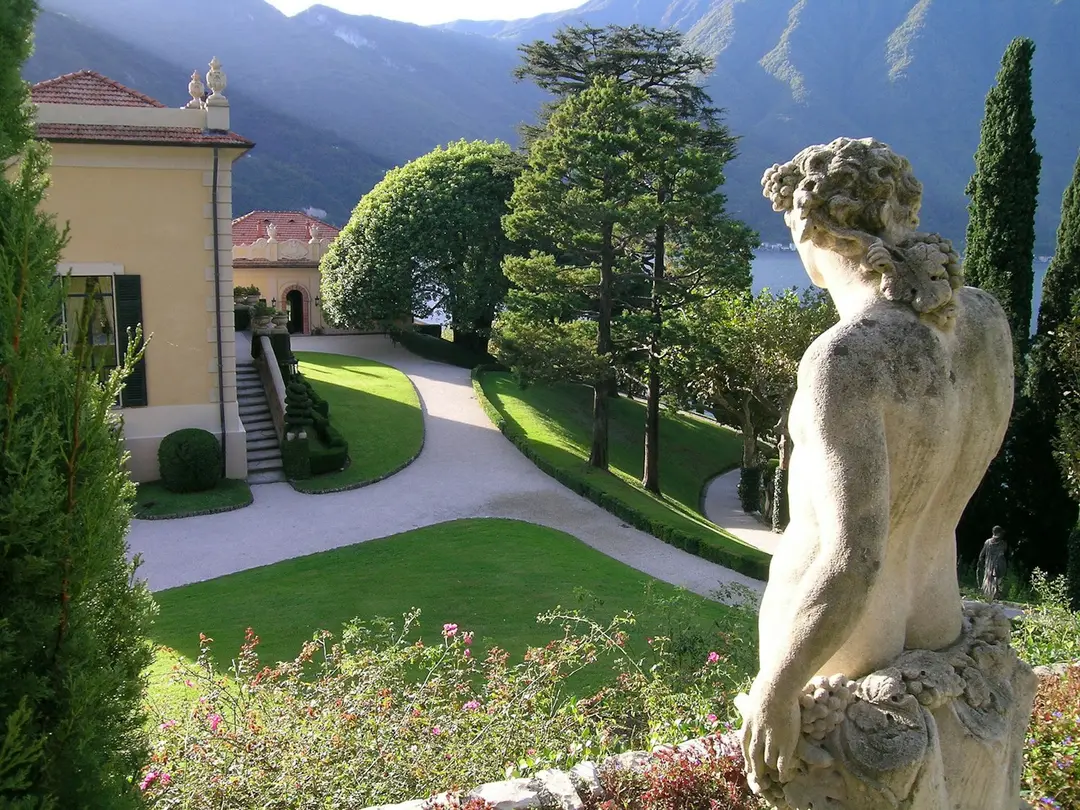
Proportion over scale: the gardens fall away toward the lake. (Villa del Balbianello / FAI)
Inside, the rooms retain the imprint of their last private owner. There is no attempt to modernise beyond necessity. Furnishings sit where they belong, not where they might photograph best. Textiles carry age without appearing worn. Light enters through narrow openings, creating contrast rather than uniformity. You move from room to room with an awareness of sequence. Nothing interrupts that flow.
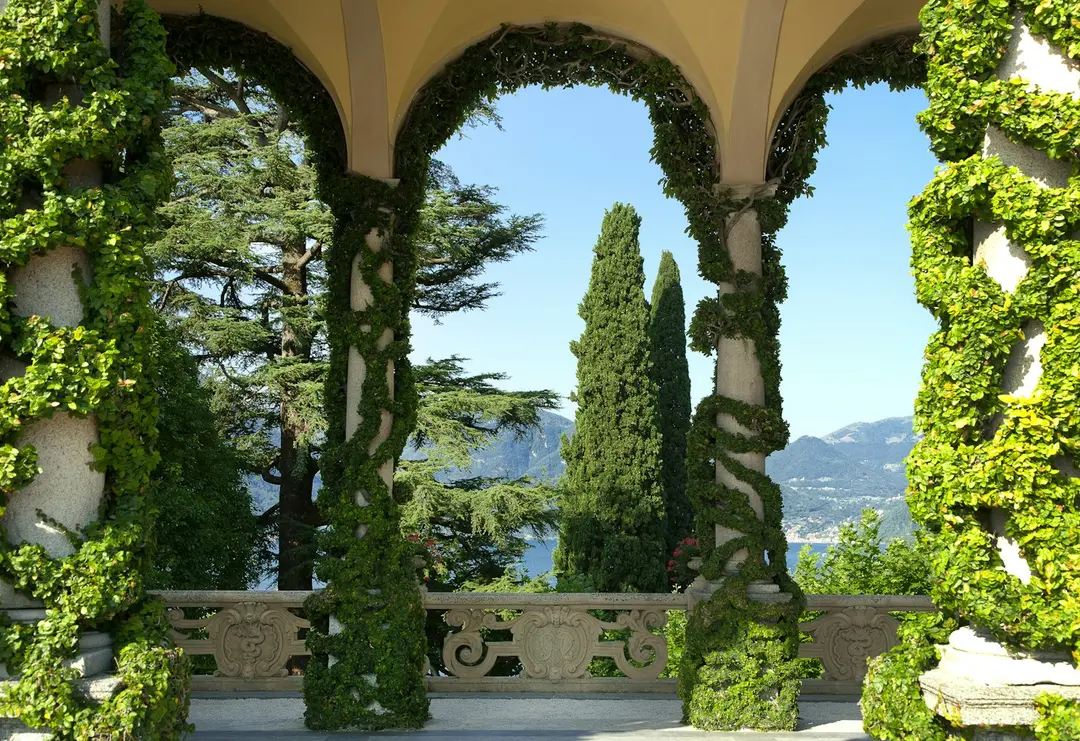
The Loggia Durini, the villa’s most famous room, open to the lake. (Villa del Balbianello / FAI)
Staying here is not comparable to a hotel experience. It is structured differently. The villa operates on a private basis, and that condition shapes everything. There are no passing guests, no overlapping schedules, no shared spaces beyond those defined by the event itself. Time feels contained within the property. The outside world remains present but distant.
Dining follows the same logic. Meals are not presented as occasions separate from the setting. They are extensions of it. Tables are positioned to hold the view without competing with it. Dishes are prepared with restraint, often drawing from the lake and the surrounding region. Fish appears frequently, treated with care rather than elaboration. Ingredients are allowed to stand without excess intervention. The pace of service reflects the pace of the property itself, unhurried, consistent, and precise.
Service is delivered with a similar sense of control. Staff move through the villa without altering its atmosphere. Interactions remain measured. There is no need for visible coordination. Everything occurs within an established rhythm that does not shift according to demand. Guests are not directed. They are accommodated within a structure that has already been resolved.
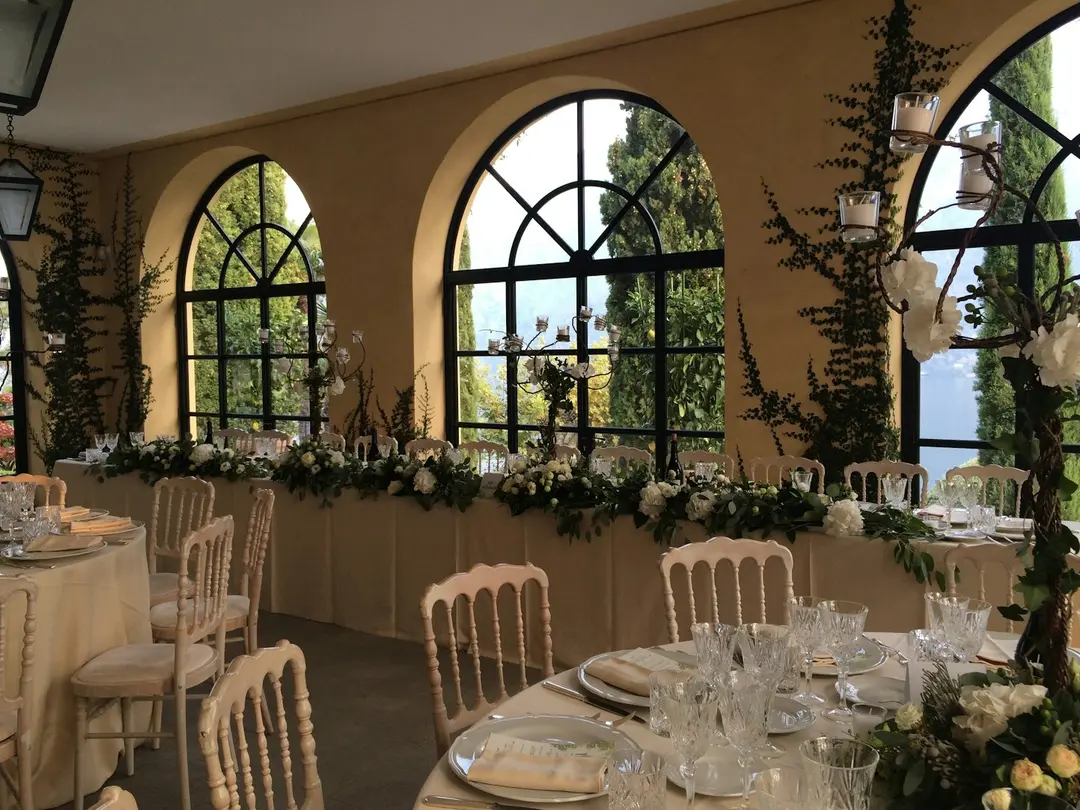
The Loggia Segre, dressed for a wedding dinner above the water. (Villa del Balbianello / FAI)
Fewer guests. More presence. A clearer sense of place. The villa does not accommodate scale, it offers something else entirely.
Inside Villa del BalbianelloAs a setting for weddings, the villa operates within strict parameters. The scale is naturally limited by the structure of the property. Guest numbers remain lower than at larger estates, and that limitation defines the experience. Events here do not expand outward. They remain contained within the terraces, the loggia, and the immediate grounds.
Ceremonies often take place along the upper terrace, where the line between land and water is most clearly held. The lake becomes part of the moment without overtaking it. Receptions move through the property rather than settling in a single space, allowing the architecture to guide the flow. The absence of excess space means that every decision carries weight. Nothing is diluted.
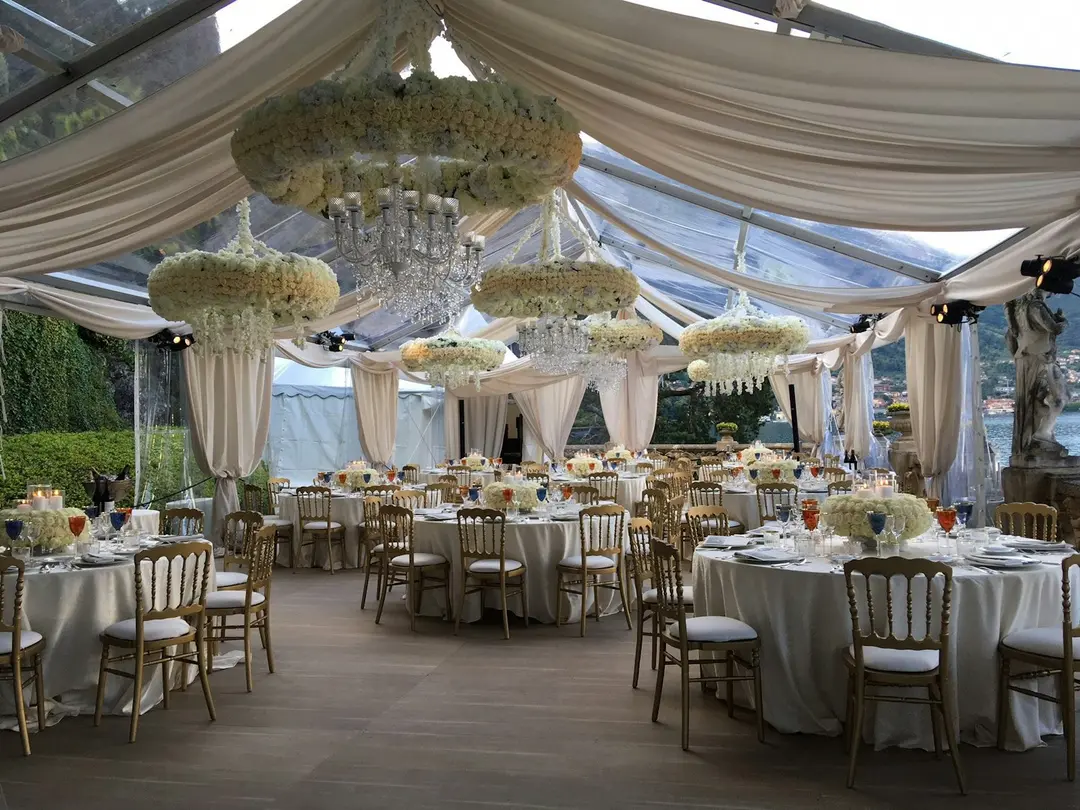
A reception on the lake terrace, the celebration held within strict scale. (Villa del Balbianello / FAI)
Privacy is not an added feature. It is the foundation. The peninsula restricts access by design. Arrival and departure are controlled entirely by boat, reinforcing the sense of separation. Once within the property, the event exists on its own terms.
This level of control is what defines the villa’s position within the wider landscape of destination weddings. It does not accommodate scale in the conventional sense. It offers something else. A structure where every element is already in balance, where the role of the couple is not to transform the space but to move within it. That distinction matters. It signals a shift away from expansion and toward precision.
As the day draws to a close, the lake returns to stillness. Light lifts from the surface and settles into the surrounding hills. From the terrace, the view holds without change. Boats pass at a distance, barely altering the water. Departure follows the same route as arrival. The boat pulls away from the peninsula, the villa receding into the trees until it disappears from view entirely. There is no final impression imposed, no closing gesture, only the sense that the property remains exactly as it was. Unmoved.
Part of Balbianello’s pull is cinematic in the most literal sense: the gardens stood in for Naboo in Star Wars: Attack of the Clones and for Bond’s lakeside convalescence in Casino Royale, and couples arrive already half in love with a place they have seen on screen. But the deeper appeal is what the camera cannot quite hold, the theatre of arriving by water, the loggia framing the lake like a proscenium, the certainty that a celebration here will never be confused with anyone else’s. It is a setting that confers occasion rather than requiring it. The couple does not have to make the day feel significant. The place has already done that.
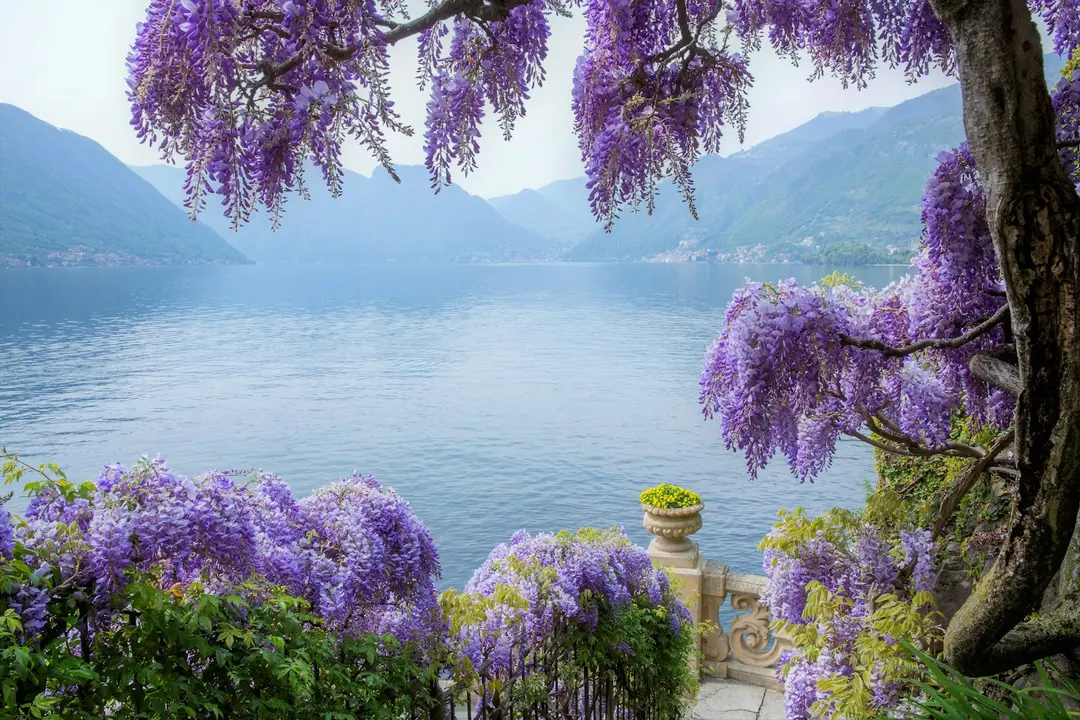
Wisteria over the terrace, the lake beyond. (Villa del Balbianello / FAI)
Balbianello is owned and protected by the FAI, Italy’s national trust, which means it operates first as a conserved historic property and only secondarily as a venue. Weddings are permitted but tightly limited, a small number of events each season, governed by conservation rules that shape everything from guest numbers to where a marquee may or may not stand. Numbers are modest by design; this is a property for an intimate celebration, not a several-hundred-guest production. Access is by boat, which must be arranged for the whole party, and the most sought-after dates are taken far in advance. Civil ceremonies can be conducted in licensed settings nearby, though many couples hold the legal formalities at home and reserve Balbianello for a symbolic ceremony, which can be staged on the terraces with complete freedom. As with any restricted heritage site, an experienced Lake Como planner who knows the FAI’s requirements is essential, and the practical details, current capacities, available dates, exact terms, should always be confirmed directly through the property.
Villa del Balbianello is a museum-house, open to the rare few who marry within its terraces, but its lesson, that the lake rewards restraint over scale, runs through the finest private villas on Como. For couples planning a celebration of their own, Villa Nascosta sits low on the western shore with a private jetty and a terrace just above the water, available for exclusive-use weekends; Villa Sofia, above Lecco on the quieter eastern arm, sets its ceremonies beneath a garden pergola with the mountains behind.
- Lakefront exclusive-use villa
- Garden villa above Lecco
For a portrait of how a wedding on the lake actually unfolds, read Beatrice & Marco: A Lake Como Love Story. For the grande dame at the other end of the shore, read Inside Villa d’Este, Lake Como.
The editorial team at Luxury Wedding Directory, profiling the world's finest wedding venues and creatives.