The married duo who shoot every Italian wedding twice over, because neither of them is the assistant.
By The LWD Edit · 16 July 2026 · 5 min
Scroll
There is a line in the Rellini Art Studio FAQ that does more work than the whole of most photographers' websites. Asked whether a second shooter is available, Maurizio Rellini and Serena Ricci answer that they photograph every wedding together, providing two experienced lead photographers rather than a photographer and an assistant. Read it twice. Almost nobody in this industry can say it, because almost nobody is married to their second shooter.
The distinction is not a marketing one. A second shooter is, in practice, a junior: someone covering the groom while the lead covers the bride, someone whose frames fill the gaps in the album rather than define it. Two leads is a different proposition entirely. It means the ceremony is photographed twice, from two positions, by two people with twenty years each behind the camera. It means the moment happening on the far side of the room is not a gamble.
⤢
⤢
They are based between Umbria and Tuscany and have been for over twenty years. More than a thousand weddings have gone through the studio in that time, which is enough volume to have seen everything and enough years to have stopped being impressed by any of it. What is left, when the novelty is gone, is attention. Their own account of the approach is that it is quiet and attentive, allowing couples to feel at ease from the very beginning, and that this sense of trust creates space for real emotions to emerge.
Maurizio did not start in weddings. He came from travel and editorial photography, shooting for the magazines that send people to places: National Geographic, Lonely Planet. That is a specific training. It teaches you to photograph a landscape as though it has a personality, to wait for the light rather than to arrange around it, and to treat a place as a subject rather than a backdrop. It has not left him. Look at how much room an Umbrian valley gets in a Rellini frame and you can see where he learned to look.
⤢
⤢
Serena is the other half of that, and the studio does not separate their contributions in any of its material, which feels deliberate. The work is credited to the pair. In an industry built almost entirely on the personal brand of a single named photographer, a studio that refuses to say which of them took which photograph is making a quiet argument about what the pictures are for.
It also solves a problem most couples never think about until the gallery lands. A single photographer has to choose. Ceremony or reaction, vows or the mother watching them, the first dance or the faces around it. Every choice is a small loss, and the loss is invisible because you never see the frame that was not taken. Two leads remove the choice. Nobody has to decide which half of the moment matters more, because nobody is standing alone.
"Our style blends documentary storytelling with editorial elegance, creating emotional and timeless images that feel authentic, cinematic and deeply personal."
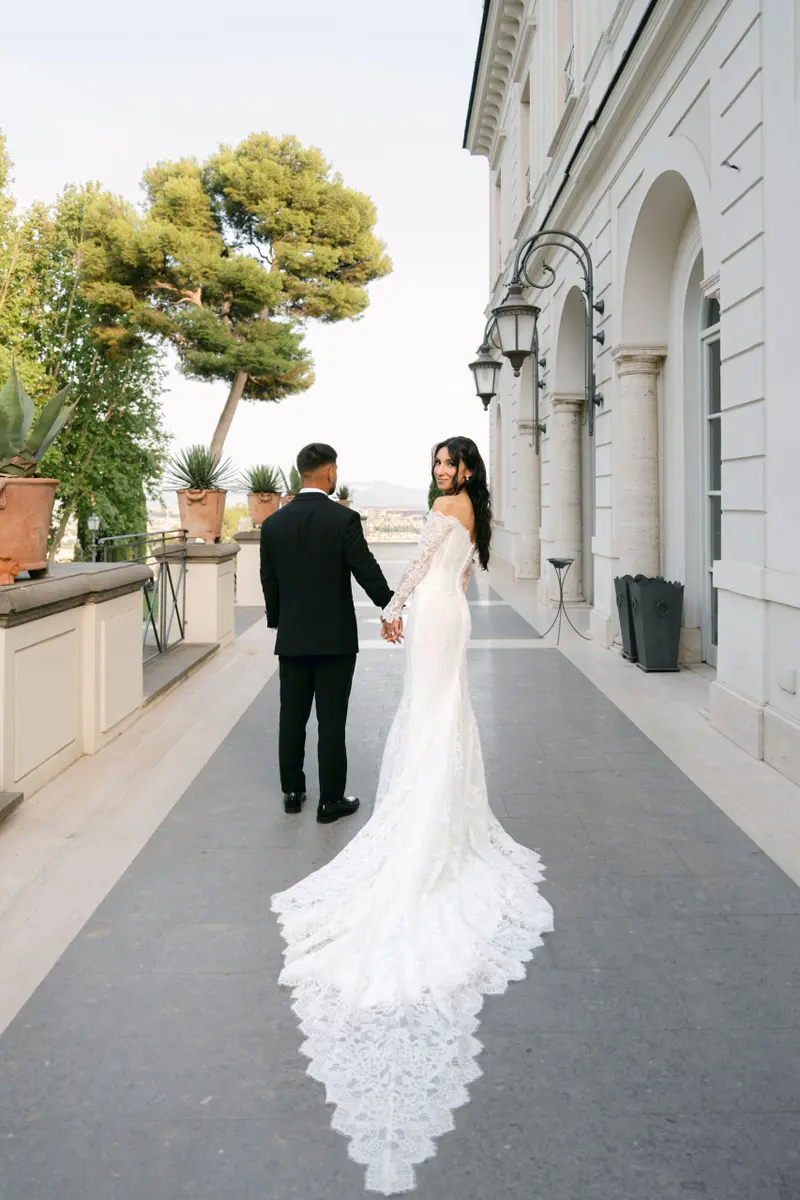
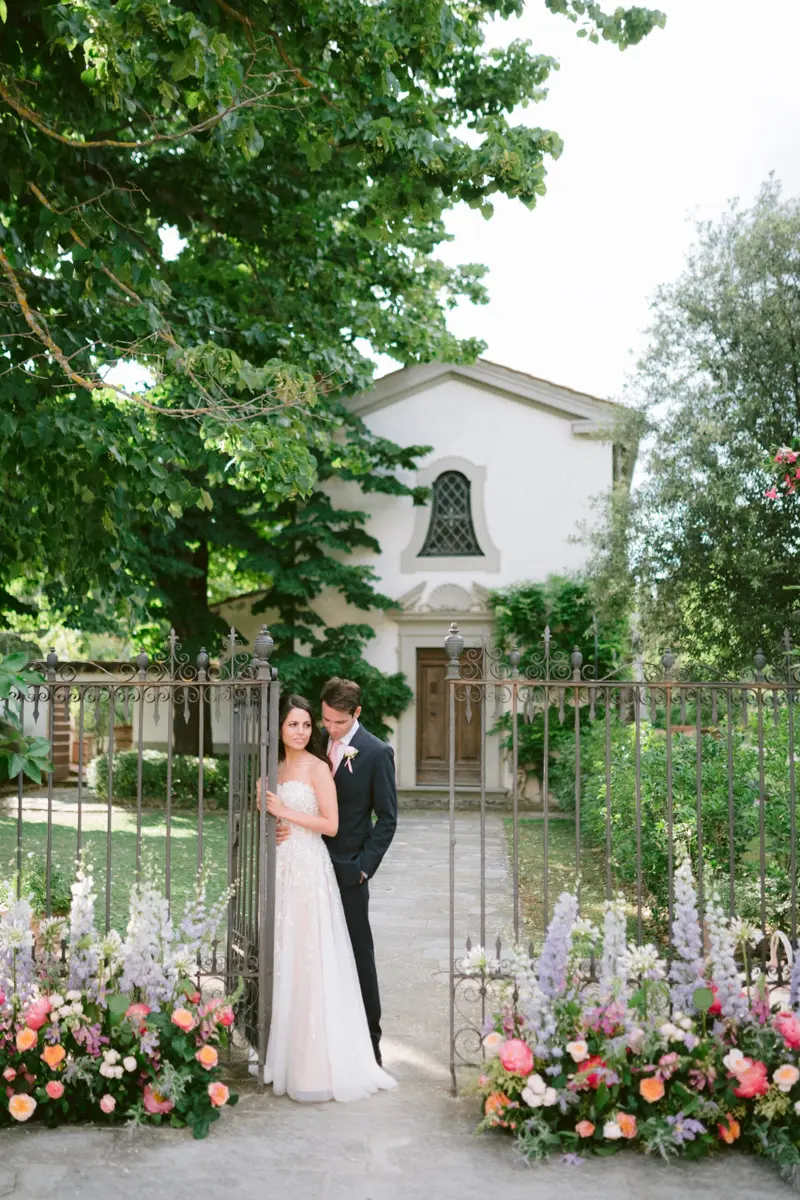
Documentary and editorial are not natural allies. Documentary means you take what is there. Editorial means you shape it. Most photographers who claim both are really doing one and apologising for the other. The Rellini answer is to let the documentary instinct decide what to shoot and the editorial eye decide how it is framed, which is why their reportage does not look like reportage. It looks composed, because it is, but nothing in it was asked to happen.
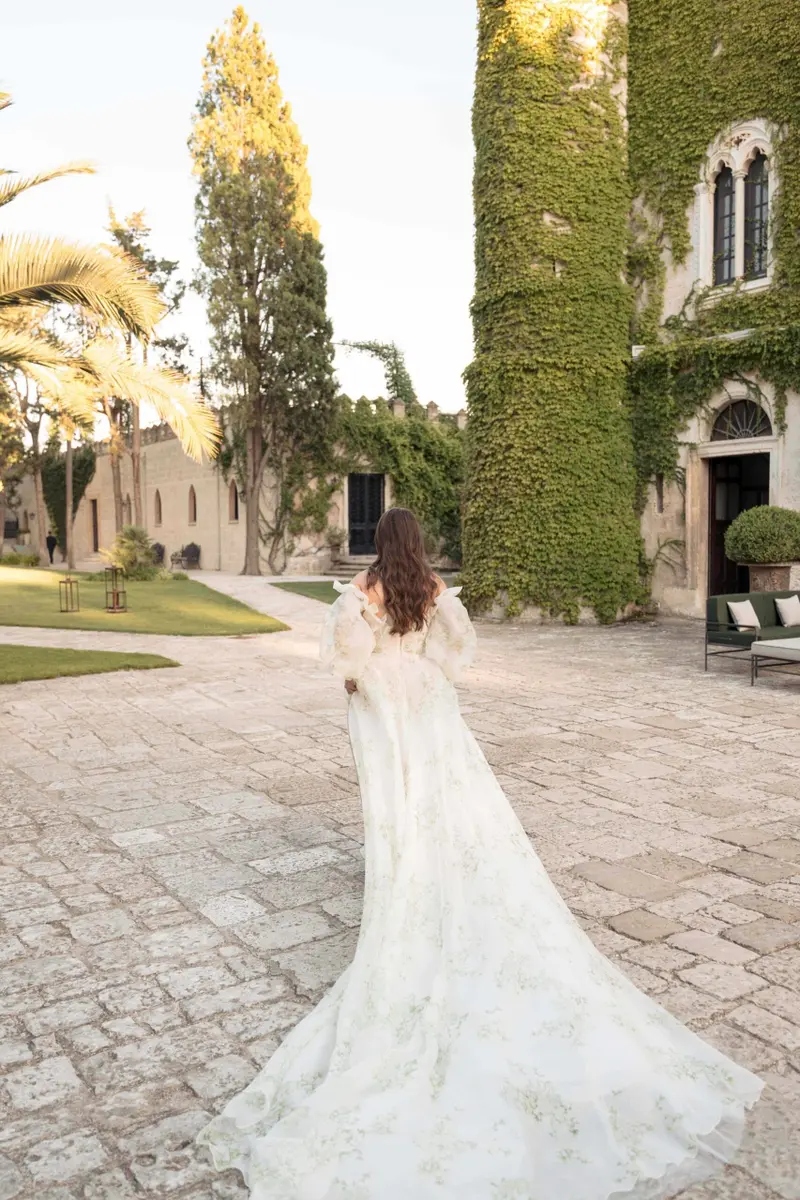
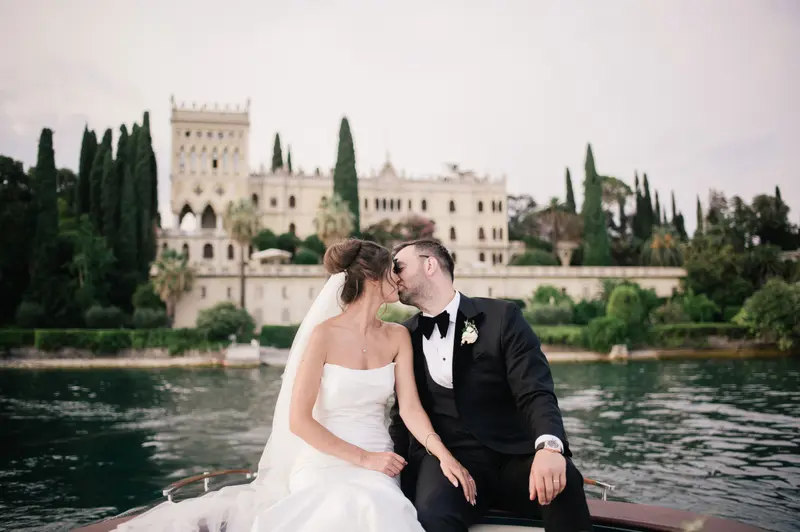
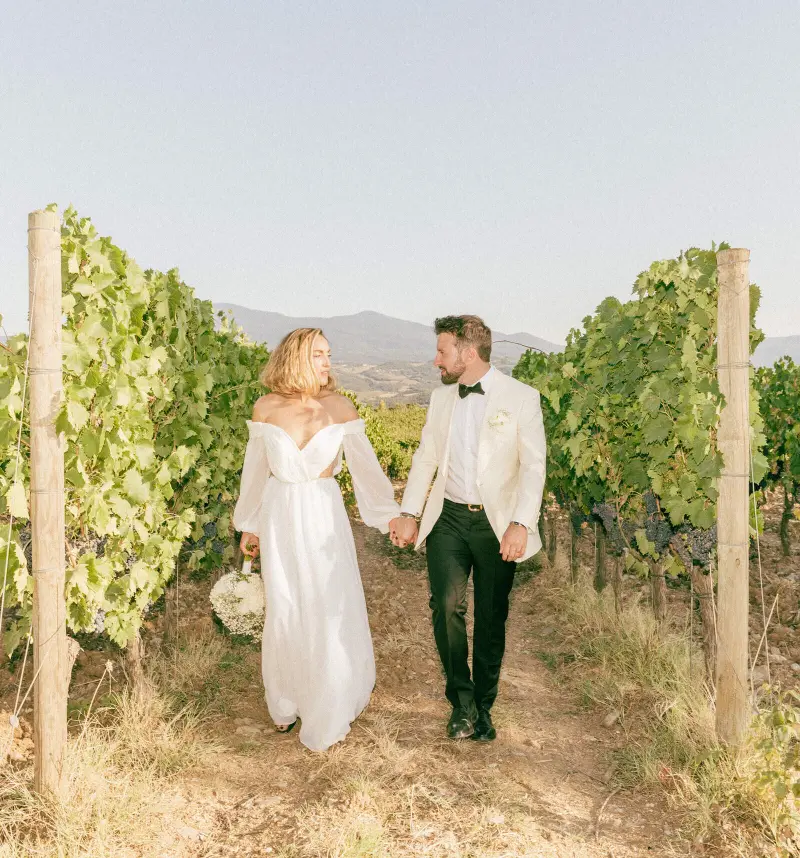
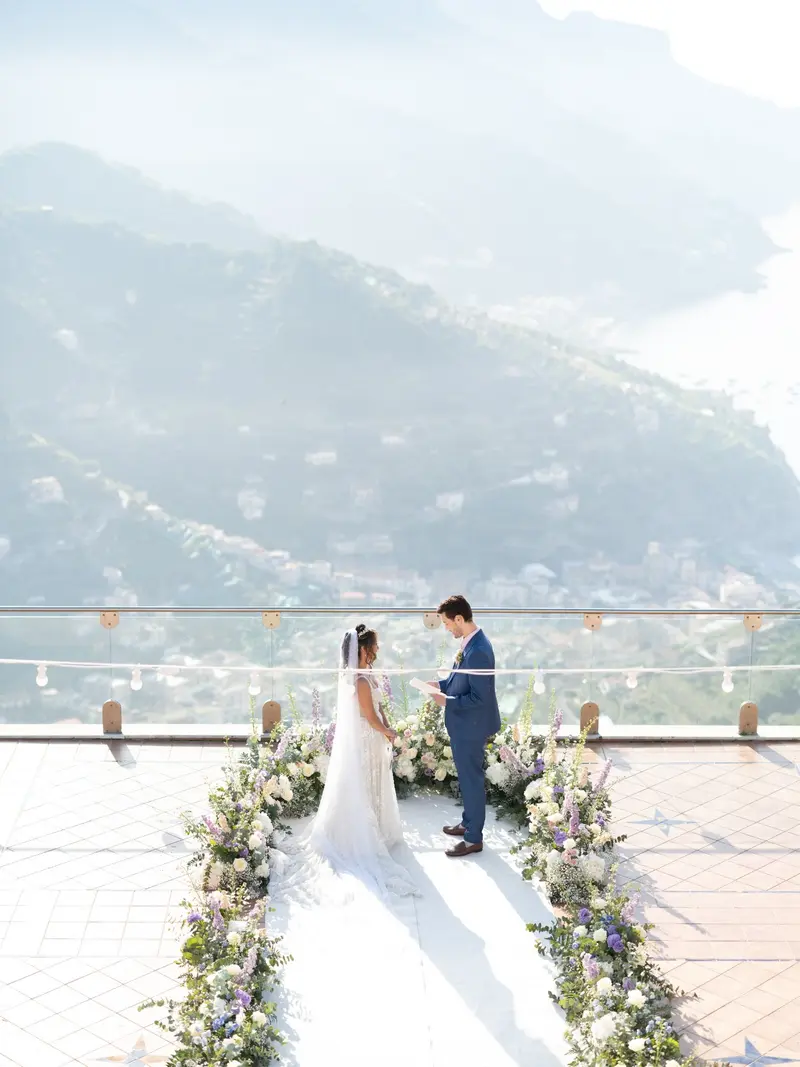
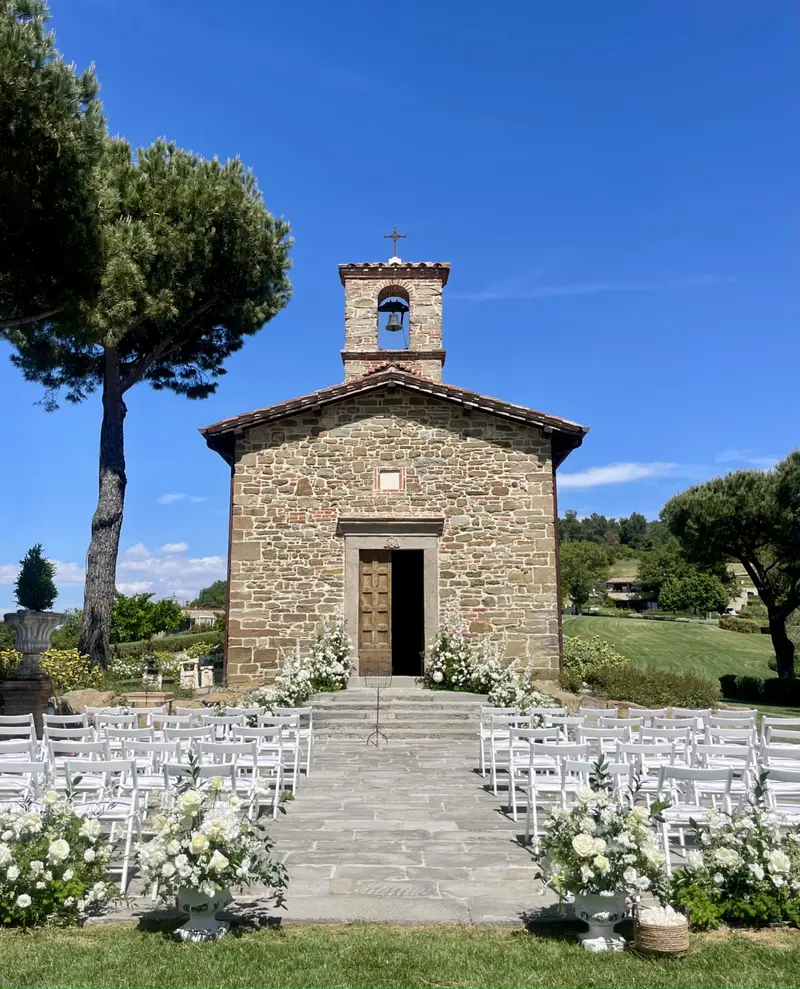
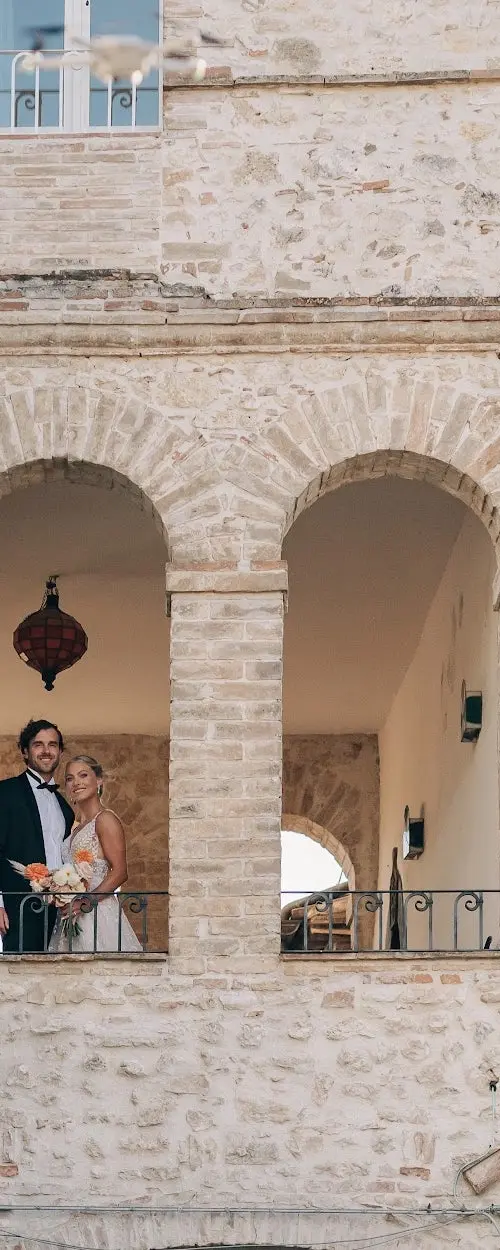
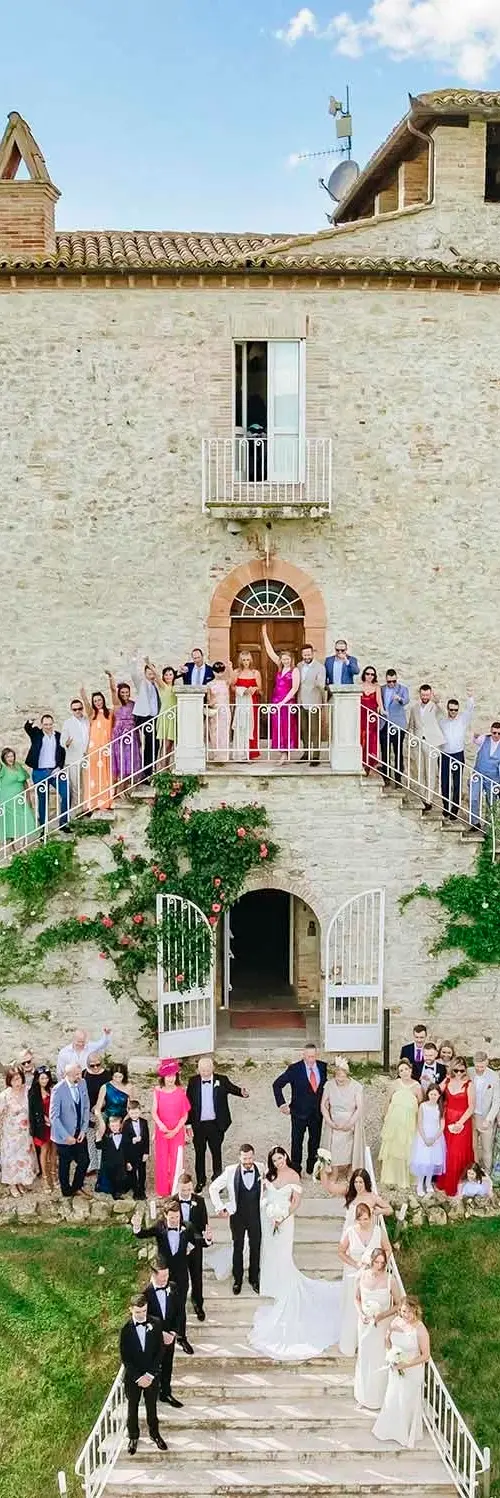
The portfolio makes the range plain. There is a Sikh wedding in Tuscany that runs from the sangeet through the Anand Karaj, the palla placed in the groom's hands, the whole multi-day architecture of it photographed without a hint of the exoticising distance that so often creeps into a European photographer's coverage of an Indian celebration. There is Castello di Montignano in Umbria, the wedding party arranged on the castle steps beneath a sky doing exactly what Umbrian skies do in summer. There is Villa Catignano near Siena, seen from the air, the ceremony a small bright disc on a lawn surrounded by trees.
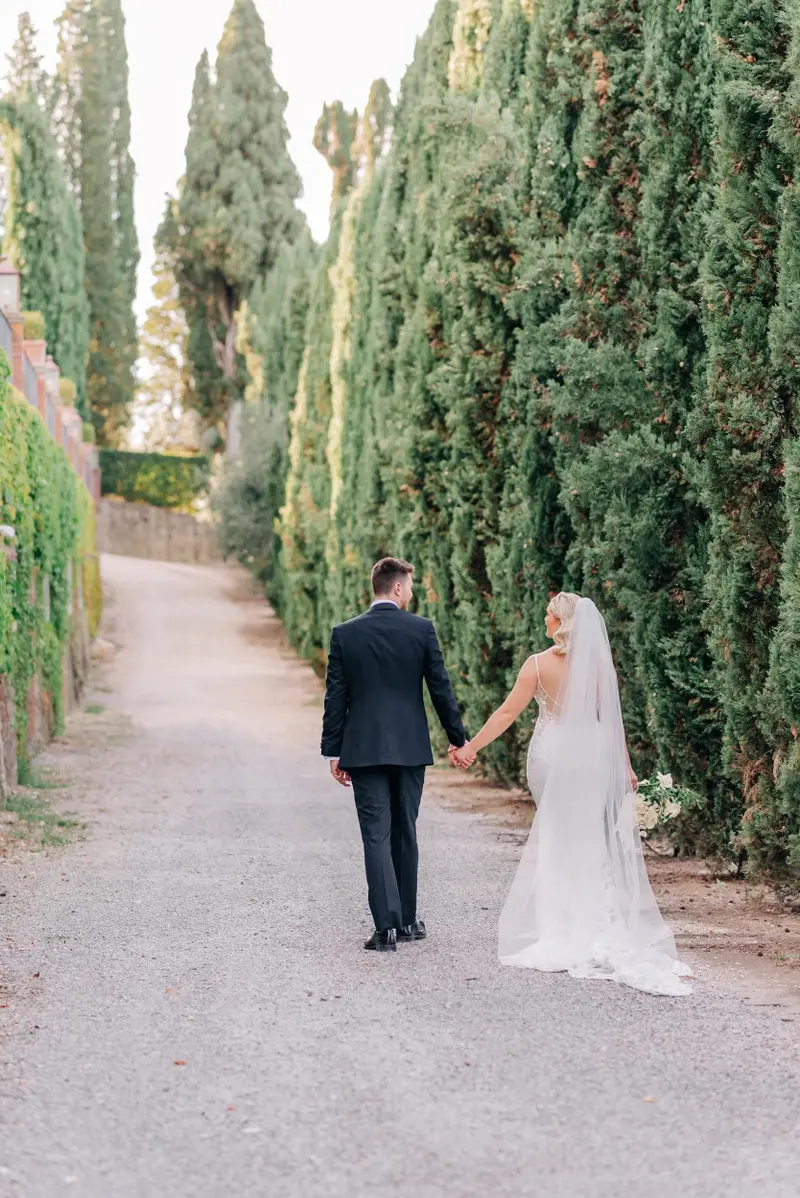
Then there is Tenuta Corbinaia in Tuscany, which may be the best of it. A long table, strung lights, the cypress walk, and a guest photographed mid-collapse into tears with a fan half-raised to her face. That last frame is the argument for the whole studio. It is not a picture anyone asked for. It is not flattering in the conventional sense. It is the single most useful photograph in the set, because it is the only one that tells you what the day actually felt like.
Tenuta Corbinaia, Tuscany: a guest, undone
The weather turns, and nobody minds
The technical scaffolding underneath is more serious than the quiet presentation lets on. They shoot analogue film alongside the digital coverage, for couples who want the grain and are willing to wait for it. Both are licensed drone pilots, and drone photography is included in many of their collections, which in a region built out of hill towns and valleys is less a gimmick than a necessity. Every photograph is delivered in both colour and black and white, so the decision never has to be made at the moment of shooting.
Delivery is fast. Full galleries typically arrive within 7 to 20 days depending on the collection, which is quick enough that a couple back from honeymoon is looking at their wedding while it is still the thing that just happened rather than the thing that happened last season. One couple, married at Borgo Colognola in Umbria, reported a highlights gallery six days after the wedding and the full album a week after that, with close to double the number of photographs their contract specified.
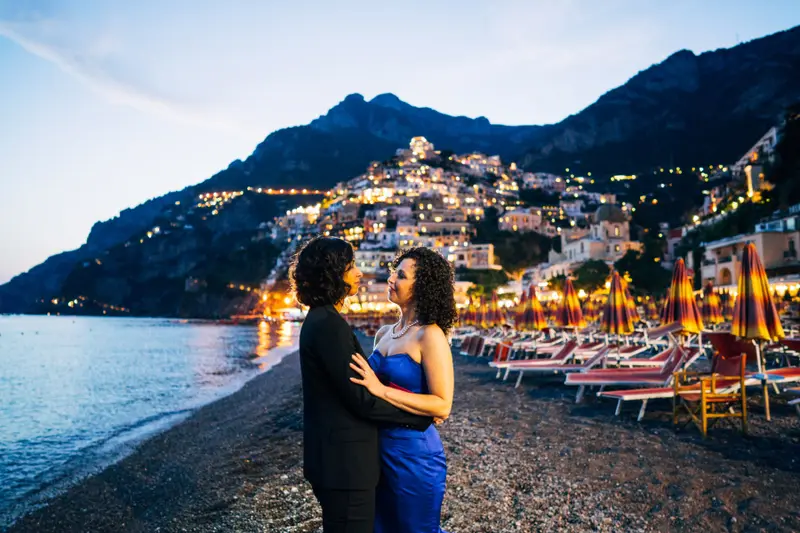
The range matters too, and it is wider than the Tuscan-villa reputation suggests. A Sikh wedding and a Tuscan castle wedding are not the same commission wearing different clothes. One is a multi-day religious event with its own choreography, its own sequence of rituals, and its own rules about where a camera can stand. The other is a single long afternoon. A studio that can photograph both without flattening either into the same set of pretty frames is doing something more difficult than it looks, and doing it in a country where the easy version, the golden hour and the cypress trees, is always available as a fallback.
What It Costs
They publish their pricing, which is rarer than it should be. Collections start at €3,650 for central Italy, covering Tuscany, Umbria, Marche, the Amalfi Coast and Rome. For the north and south, meaning Lake Como, Sicily, Puglia and Milan, they start at €4,800. Their FAQ notes that published collections generally include travel costs throughout Italy, so the number does not quietly grow with the length of the drive. What each collection contains is not published, and they will confirm it against your date.
The car, waiting
Window light, the last quiet hour
The groomsmen, on the tennis court
Scroll to explore
The recognition has arrived on schedule. They were named Wedding Photographers of the Year at the EWPC 2024 in Bodrum. Junebug lists them among the best wedding photographers in Italy. The Lane, which operates by invitation only, added them to its directory. Brides Magazine picked them as the best wedding photographers in Tuscany and Umbria. Maurizio's earlier career produced, by the studio's own count, more than seven hundred magazine covers for Lonely Planet.
None of that is why you would book them, though. You would book them because of the second-shooter answer, and what it implies about every other decision the studio makes. Two leads is more expensive to deliver and harder to schedule and impossible to scale, and they do it anyway, at every wedding, without offering the cheaper version.
That last part is the tell. Most studios that offer something good also offer a worse version of it at a lower price, because the worse version is where the volume is. Rellini do not appear to have one. There is no collection where only Maurizio comes, no tier where Serena is replaced by somebody younger and cheaper. The pair is the product, and it is not unbundled. For a couple comparing quotes on a spreadsheet, that makes the studio look expensive. For a couple comparing galleries, it explains why.
Tenuta Corbinaia, Tuscany: the groom, walking in
A wedding is photographed once. There is no second attempt, no reshoot, no version of the day where the light was better and everyone stood somewhere more convenient. The entire value of a wedding photographer sits in what they were looking at during the ninety seconds you were looking at each other. Rellini Art Studio has arranged its whole practice around the simple fact that two people looking is better than one, and has been doing it for twenty years in the most photogenic country on earth.
The couples who find them tend to describe the same thing afterwards, in slightly different words: that they forgot the photographers were there, and then the gallery arrived and it turned out nothing had been missed. That is the trick, and it is not really a trick. It is just two people who know what they are doing, standing in different parts of the room.
Credits
Photography
Rellini Art Studio
Photographers
Maurizio Rellini and Serena Ricci
Based
Between Umbria and Tuscany, Italy
Website
relliniartstudio.it
Written by
The LWD Edit
The editorial team at Luxury Wedding Directory, profiling the world's finest wedding venues and creatives.
Filed under
Share
Rellini Art Studio · Enquire
Enquire with Rellini Art Studio
Send an enquiry and our wedding team will connect you with the venue.
We use essential cookies to make our site work, and optional cookies to personalise content and improve your experience. By clicking Accept All, you agree to our use of cookies. · Cookie Policy