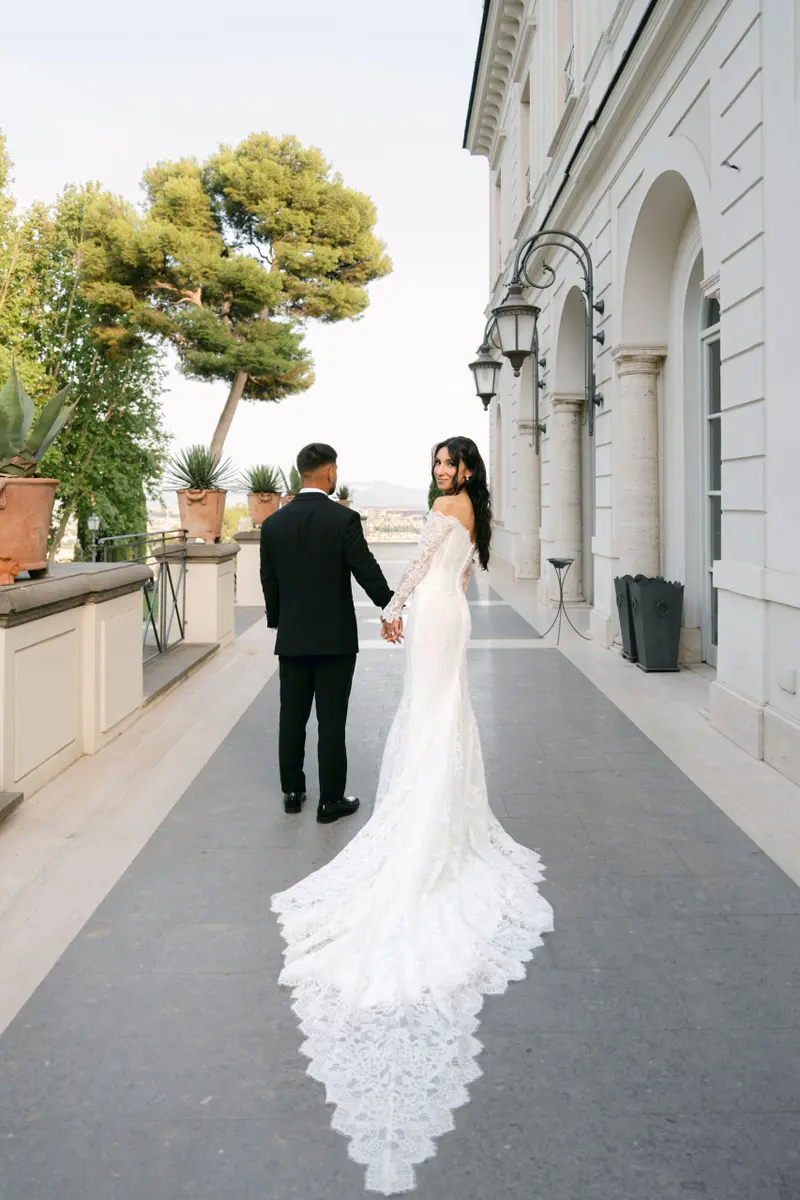
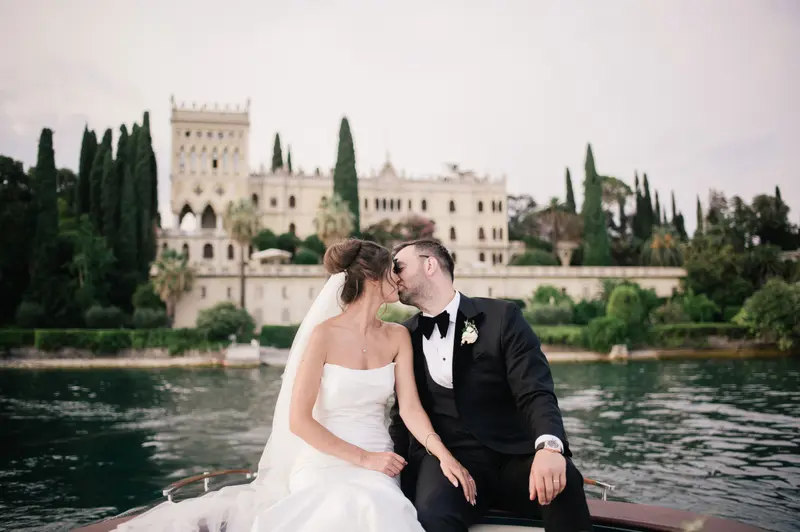
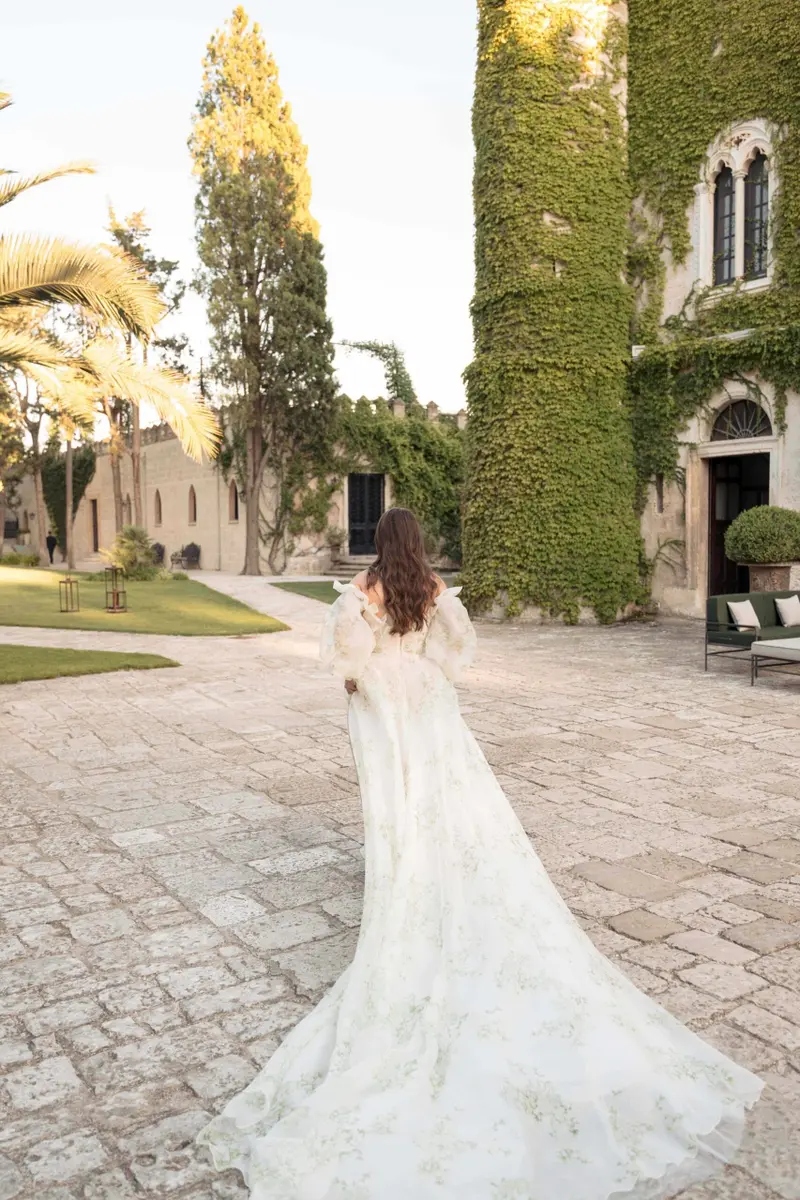
Umbria has no coast, no border and no queue. Inside the practice of the Spanish planner who moved there in 2014 because nobody else had.
By The LWD Edit · 23 August 2026 · 5 min
Scroll
Umbria is the only region in Italy with no coastline and no border with another country. Landlocked on all four sides, it was never on anybody's route, and being off the route is the most valuable thing about it. The medieval architecture is the equal of anything in the country: Assisi, Orvieto, Spoleto, Gubbio, Todi, Spello, Montefalco. The abbeys are twelfth century. The hill towns look the way people imagine Italy looks. And because no coach ever had a reason to stop, the diaries are not full three years out and the prices never learned to behave like the region next door. Umbria Weddings and Events was founded in 2014 on exactly that observation, by somebody who was not Italian and had no reason to be sentimental about it.
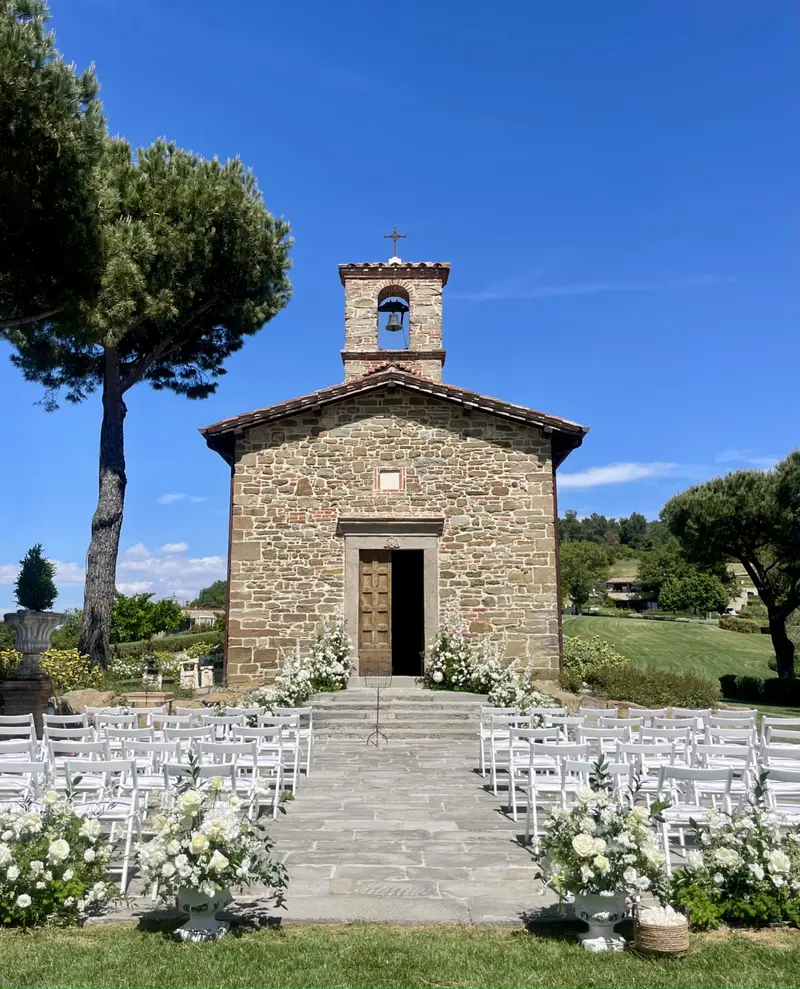
The bell tower and the apse of the twelfth century church
Fatima Palomares was born and raised in Spain. She left after a degree in International Business, feeling, in her own account, out of place in a small hometown, and spent the years before the agency working in tourism agencies across three countries and then for Prada and for Louis Vuitton. That is the part of the biography that explains the standard rather than the taste. Nobody comes out of luxury retail casual about how a client is answered.
Italy was not a plan, it was a reaction. She came, was taken by the art and the food and the way the day is organised around eating, and then she went to Umbria and understood what she was looking at. Her line for it, on her own About page, is that as a foreigner she realised Umbria lacked a specialist in destination weddings and felt compelled to fill the gap. Read commercially rather than romantically, that is a market analysis: a region with world class venues, no competition, and a specific customer, the foreign couple who cannot read the contract, cannot call the town hall and cannot tell from a website whether the plan B for rain is a real room or a marquee somebody will hire on the day.
Twelve years later she still publishes two regions and not twenty. The footer of her site says Umbria, Toscana, Italia, and that is the whole territory. It sounds like a limitation until you compare it with the standard Italian planner proposition, which is the entire peninsula plus the islands, half of it delivered by somebody the couple will never meet. Depth in one region buys things breadth cannot: knowing which venue has a serious wet weather room, which one has an internal kitchen worth using, which hamlet the mayor will actually come out to, and which florist can be relied on in the second week of August.
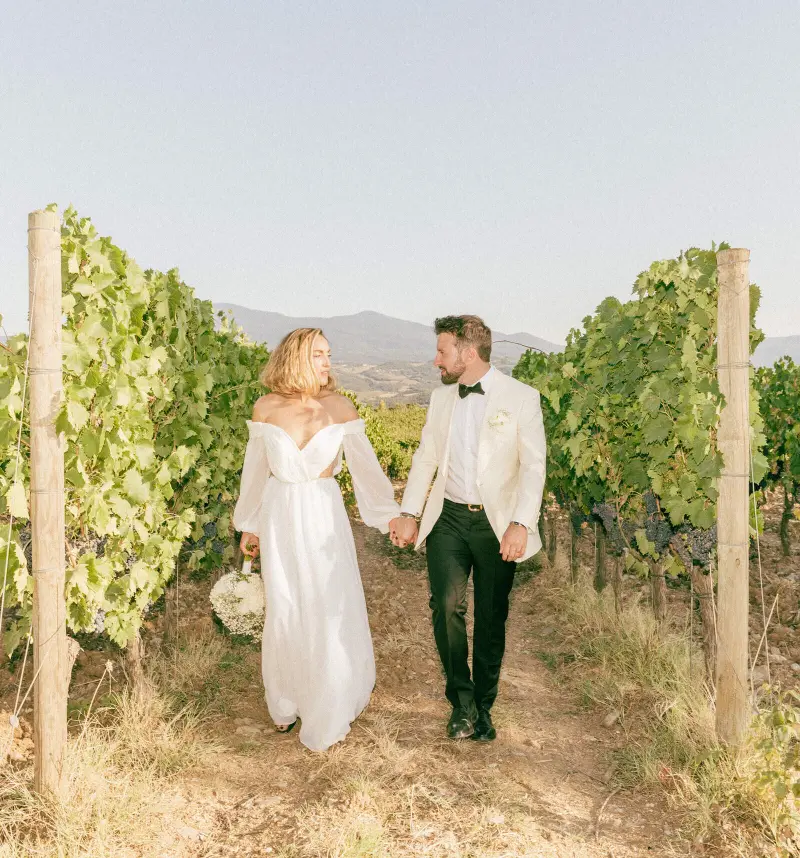
The portfolio is a tour of places a couple would not find alone. The Benedictine abbey of San Pietro in Valle is a former monastery in a wooded valley, restored, with olive groves and vineyards around it and a bell tower over the whole thing. Its cloister takes a full seated dinner under chandeliers hung between the columns, and the original twelfth century church will hold a religious ceremony. La Badia di Orvieto has marble mosaic floors, arched porticos, frescoed vaulted ceilings and a twelfth century tower. Castello di Petrata was begun in 1340 on the Franciscan path between Assisi and Gubbio, became a fortress, then a country house, and is now a relais with twenty rooms, a wellness centre and a terraced garden looking straight at Assisi.
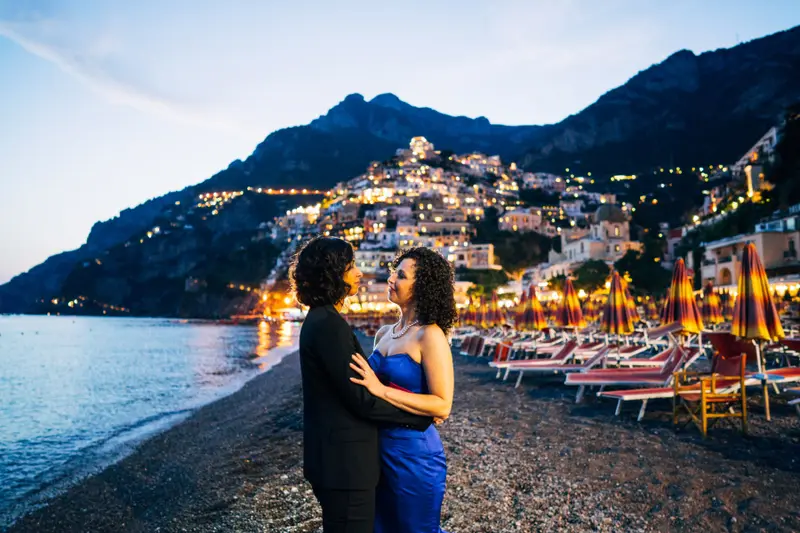
Two brides taking their vows in front of a wall of flowers
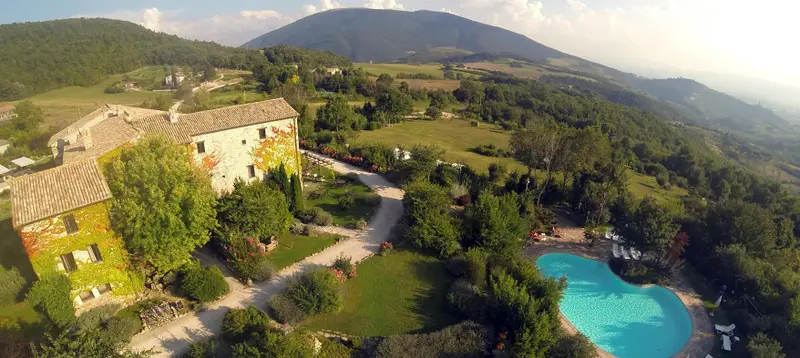
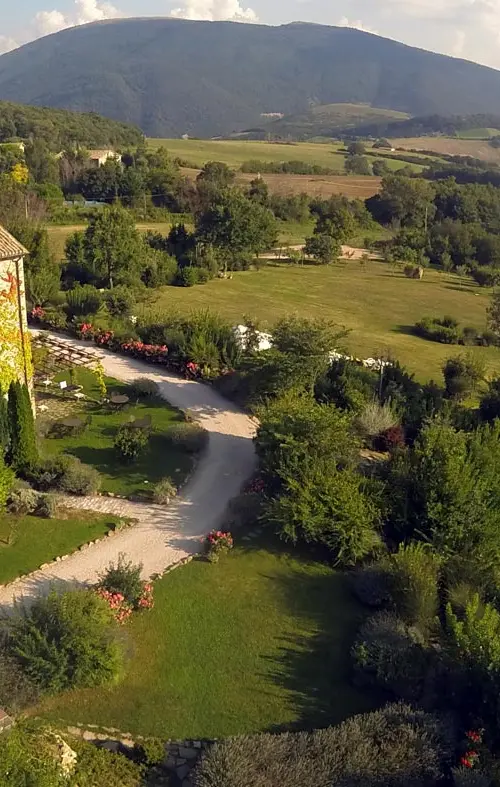
Then there are the ones she will not name. A thirteenth century abbey, renovated into a resort with sixteen rooms, hidden in woodland, described on her site only as an Abbey in Umbria: it has been appointed casa comunale, which means the mayor can perform a legally binding civil ceremony inside it, which is the single most useful fact in this article for a foreign couple. A Renaissance villa hidden in a forest and restored by an Italian artist, with frescoed bedroom ceilings and a front loggia that seats a hundred for dinner. A borgo with its own small Baroque church, where civil and religious ceremonies are both possible and the whole medieval square can be closed for a party of fifty to a hundred. A farmhouse at the end of a cypress avenue with a pool over the valley and a heated indoor pool, a hydromassage and a Turkish bath for the morning after.
Over the border she works Tuscany as a second region rather than a claim. Villa Monaciano near Siena, which is where Killing Eve was filmed, holds a hundred guests on site and can seat two hundred for dinner across the garden with its centenary cedar, the nymphaeum looking at the vineyard, or the front of the villa itself. An eighteenth century villa set inside a twelfth century borgo sits a few kilometres from Florence and near Siena. Antico Podere Siliano straddles the two regions outright, on the border, twenty two hectares with Lake Trasimeno and Cortona both a short drive away, seventeen bedrooms and a private lake.
⤢
⤢
What the weddings themselves look like is consistent in a way that is easy to miss. There is a great deal of table and very little structure. A single long table down the side of a villa with strung lights above it and a bottle of local oil at every cover, to be taken home. Another under climbing roses with olive branches laid down the centre of the linen and nothing else on it. Round tables in a cloister with chandeliers between the columns, which is all the decoration a twelfth century arcade can take before it starts to look decorated. When the architecture is nine hundred years old the design job is subtraction.
The food is treated as content rather than catering. One couple cut a crostata di fragole the size of the table, dressed with olive branches and pink carnations, instead of a tiered cake, which is what Italians do and what foreign couples almost never think to ask for. Several venues run their own kitchens using what is grown on the estate: olive oil, vegetables, fruit and edible flowers in one case, homemade pasta, truffles and Cinta Senese in another, wine from the property's own cellar in a third. Her published process makes a point of the pre-wedding programme too. A pizza evening, a pasta lesson, tastings, folk music, gelato served from a traditional three-wheeled ape car. Guests who have flown for a day are not there for six hours on a Saturday, and the week is built accordingly.
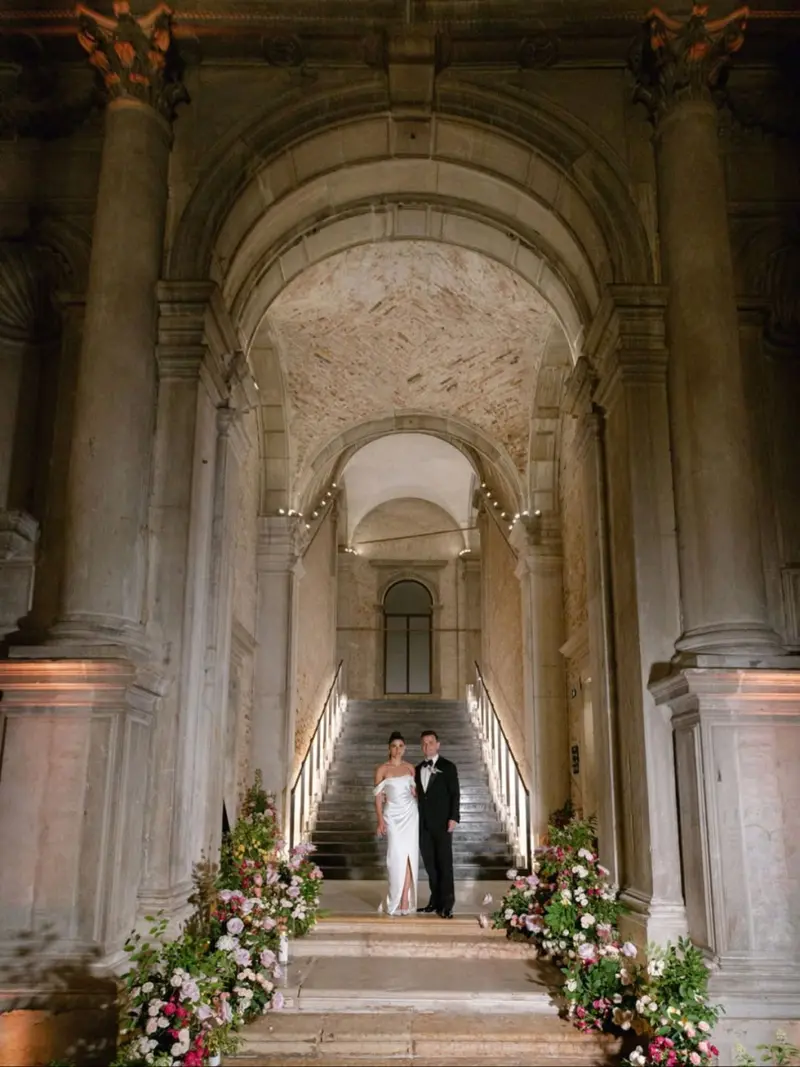
Guests banked up the villa staircase
On money she is more useful than most of the industry and it is worth saying why. She publishes a long guide called how much a wedding in Umbria costs, and it opens by saying that the estimates circulating online are untruthful and misleading, which is not the usual register. Then it does the work: the variables that actually move the number are guest count, the exclusivity of the venue, the season and the day of the week. High season is May to September, low season October to April. A midweek ceremony costs proportionally less than a Saturday. Exclusive use costs more than sharing the date with another wedding, and is worth it. Her figure is from around 25,000 euro for a complete wedding, and 25,000 to 30,000 euro for about fifty guests, and she notes that Umbria comes in slightly under Tuscany for the same event.
That number is the whole wedding, not her fee. Her own fee is not published anywhere, and the sequence she describes is a consultation, in person or on video, and then a tailored proposal setting out the services with a detailed breakdown of costs and timelines. For a couple planning from four thousand miles away, in a language they do not read, a planner who commits the arithmetic to paper before anything is signed is worth more than a published tier list would be.
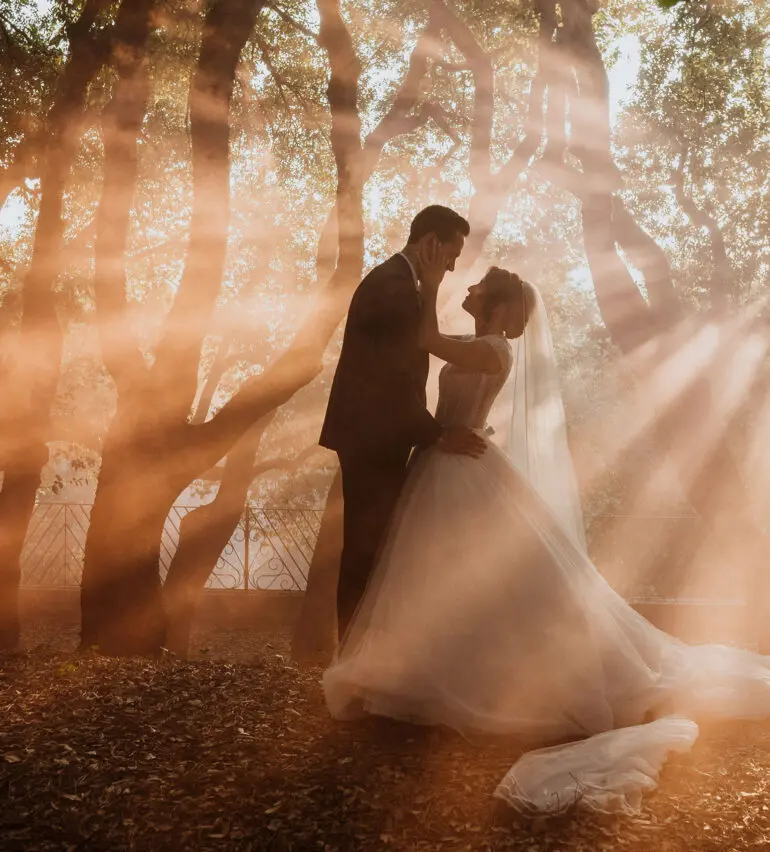
Roses, ranunculus and eucalyptus on the ceremony arch
The reviews are the other kind of evidence. Her Google profile carries a 4.8 average across thirty six of them, and the useful thing is not the average but what recurs. A Canadian bride wrote that she had always wanted an intimate Italian countryside wedding but that planning from the other side of the world made her nervous, and that what settled it was Fatima setting expectations early about how different North American and Italian booking timelines are. Another couple, writing four months ago, said that six months after the wedding everyone still calls it the best they have been to. A third wrote at length about the supplier relationships, and specifically that the access those relationships gave translated into competitive prices rather than only into availability. The aggregate is not unanimous, and it would be dishonest to imply it is: there is a sharply negative review in there too. Thirty six reviews at 4.8 is what a real trading history looks like.
Two more things are worth knowing. Her home page carries Style Me Pretty and Junebug Weddings under an as-seen-on line, and a wedding she planned at the abbey of San Pietro in Valle was featured in Style Me Pretty, complete with a tea ceremony in Chinese dress to honour the bride's family alongside vows exchanged in the chapel. And the portfolio quietly evidences inclusivity rather than announcing it: two American brides married at La Badia di Orvieto, published alongside everything else, with no separate heading and no campaign attached.
Cutting a crostata di fragole instead of a wedding cake
So the fit is easy to describe. A couple marrying in Italy from somewhere else, who would rather have a twelfth century abbey to themselves than queue for a famous address, who want the person who answered the first email to be the one directing the day, and who would like the budget explained before it is spent. Ask about the region before you ask about the venue. The argument for Umbria is the whole proposition, and she has been making it since 2014.
Credits
Planning and design
Umbria Weddings and Events
Films
Umbria Weddings and Events
Written by
The LWD Edit
The editorial team at Luxury Wedding Directory, profiling the world's finest wedding venues and creatives.
Filed under
Share
Umbria Weddings and Events · Enquire
Enquire with Umbria Weddings and Events
Send an enquiry and our wedding team will connect you with the venue.
We use essential cookies to make our site work, and optional cookies to personalise content and improve your experience. By clicking Accept All, you agree to our use of cookies. · Cookie Policy