Getting Married in Umbria
Tuscany’s quieter sister, the green heart of Italy. A complete guide to marrying in Umbria, the land of St Francis and medieval hilltowns, of black truffles and Sagrantino: where to say your vows from Assisi to Orvieto, when to come, and what it truly costs.
If Tuscany is the postcard, Umbria is the secret it keeps. Landlocked at the very centre of Italy, the only region with neither a coast nor a foreign border, it is the country folded in on itself: a green heart of oak forest and olive terrace, of medieval towns stacked on their hills like reliquaries, of a silence that Tuscany, for all its beauty, lost to the world some decades ago. This is the land of St Francis and St Benedict, of black truffles dug from the Norcia woods and of Sagrantino, the most concentrated red in Italy. Couples who find Umbria tend to keep it. They marry here not because it is fashionable, but because it is not.
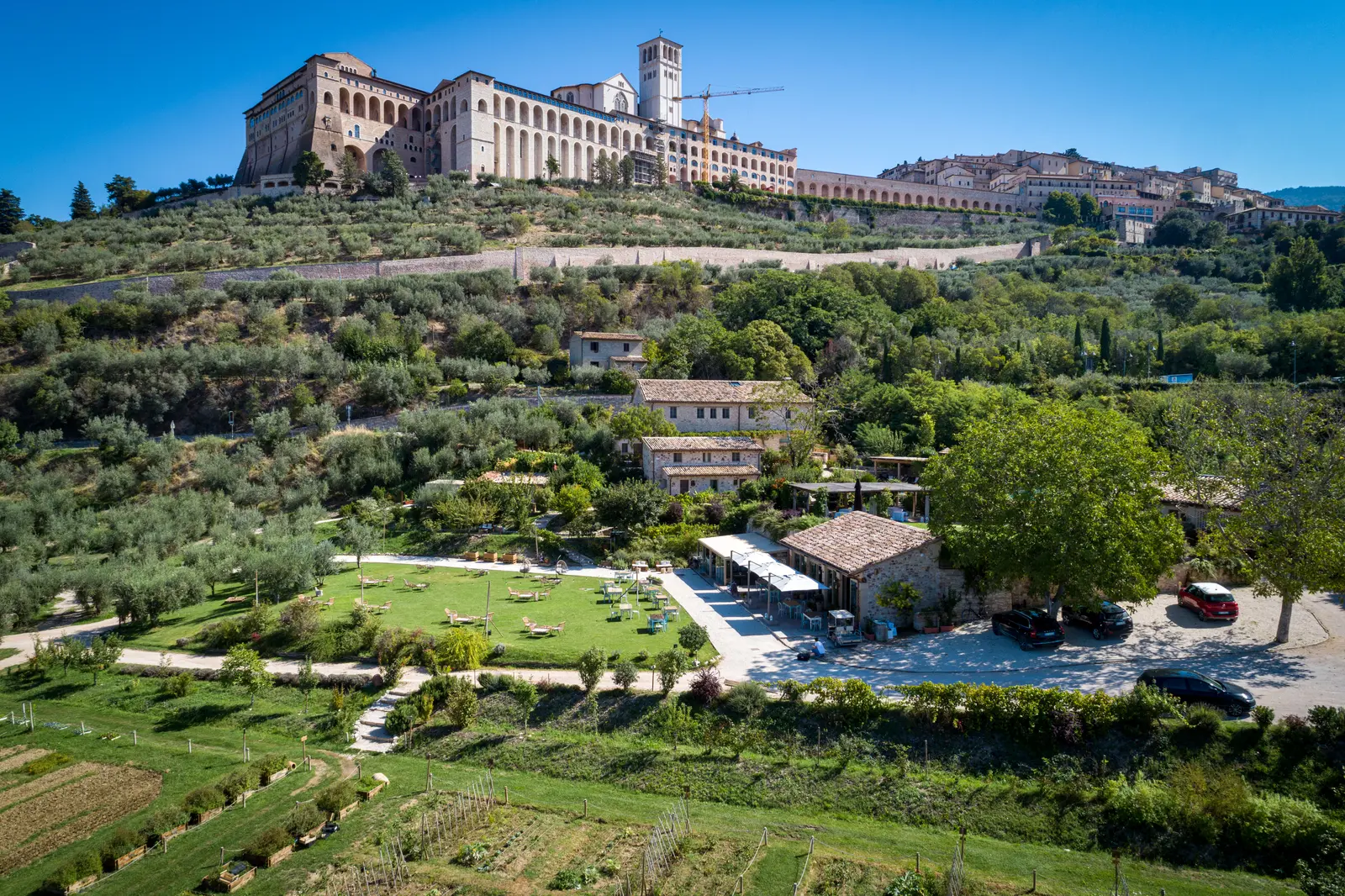
Borgo Antichi Orti Assisi, beneath the Basilica di San Francesco
Umbria sits directly below Tuscany, and the comparison is unavoidable, but the differences matter more than the likeness. Where Tuscany is open and golden, Umbria is greener, steeper and more enclosed, a country of wooded valleys and sudden hill-towns rather than combed vineyards. It is smaller, and quieter, and noticeably gentler on the budget. Above all it is older in spirit: this is the spiritual centre of Italy, the place St Francis chose, and a certain stillness comes with that. For a couple, the appeal is a wedding that feels discovered rather than booked, intimate rather than staged, and set against landscapes and towns that almost no one else has used.
The region divides naturally into a handful of worlds. Assisi and its hills are the spiritual heart, watched over by the great Basilica. Perugia and the centre hold the grandest castles. Gubbio guards the wild north, Orvieto and the Tiber valley the gentle south, and everywhere the medieval towns, Spello, Montefalco, Todi, Spoleto, sit waiting to be married into. The first thing a couple does here is choose which Umbria they want, and the region, generously, holds a great venue in each.
No town in Umbria carries the weight that Assisi does. The pink-stone city climbs its hill beneath the immense Basilica di San Francesco, and to marry within sight of it is to borrow something of its serenity. In the hills just below the walls, Borgo Antichi Orti Assisi is a restored medieval hamlet of herb gardens and olive groves, where ceremonies take place in the Hortuli gardens with the illuminated Basilica rising behind the vows. Above the town, Castello di Petrata is a fourteenth-century fortress with a glass-roofed hall, La Limonaia, and panoramic terraces over the whole Umbrian valley. And among the olive terraces below the basilica, Tenuta San Masseo offers a larger exclusive-use estate for symbolic ceremonies in the gardens, celebrating under its glass Vista Cube marquee.
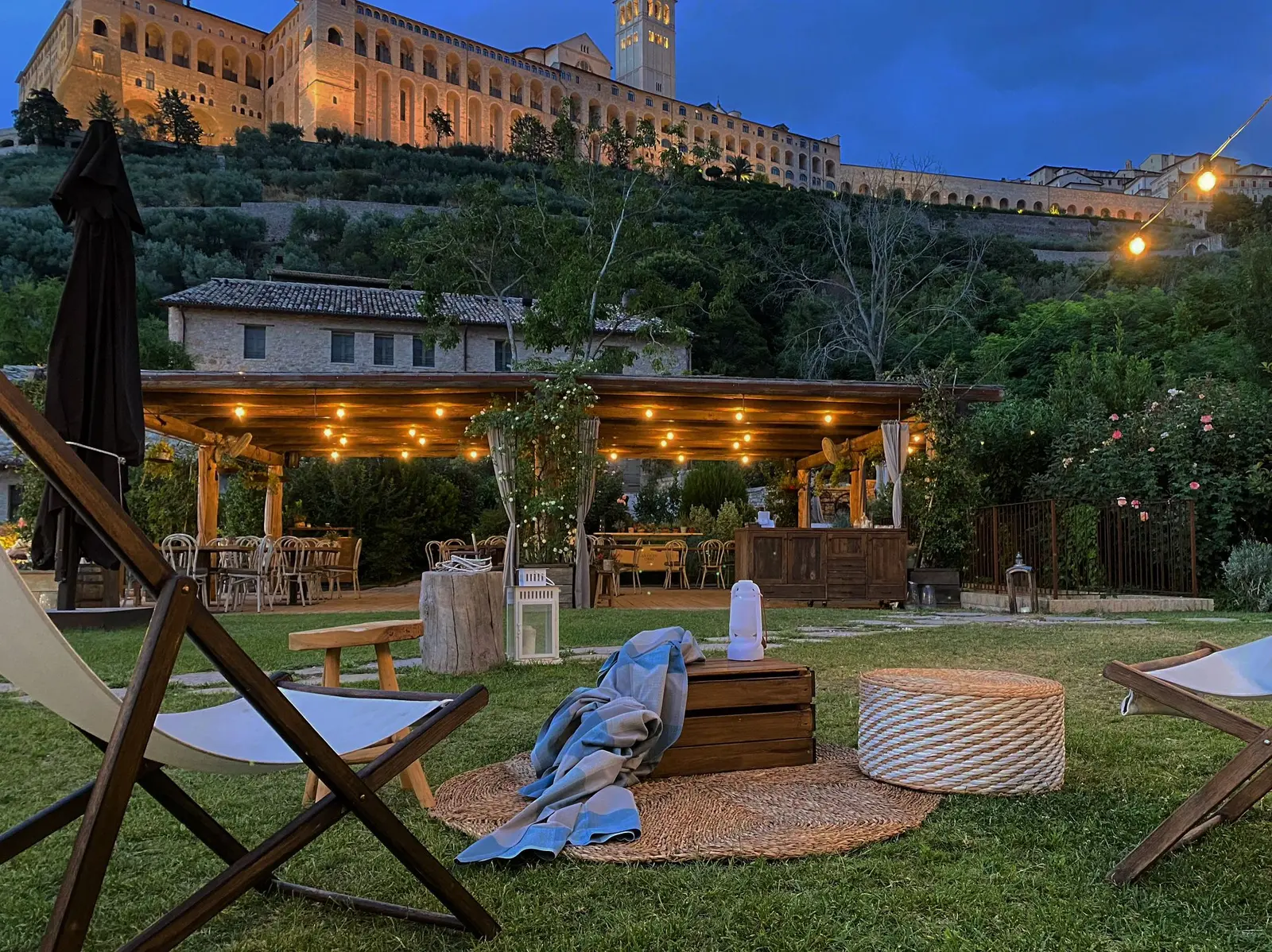
Borgo Antichi Orti Assisi
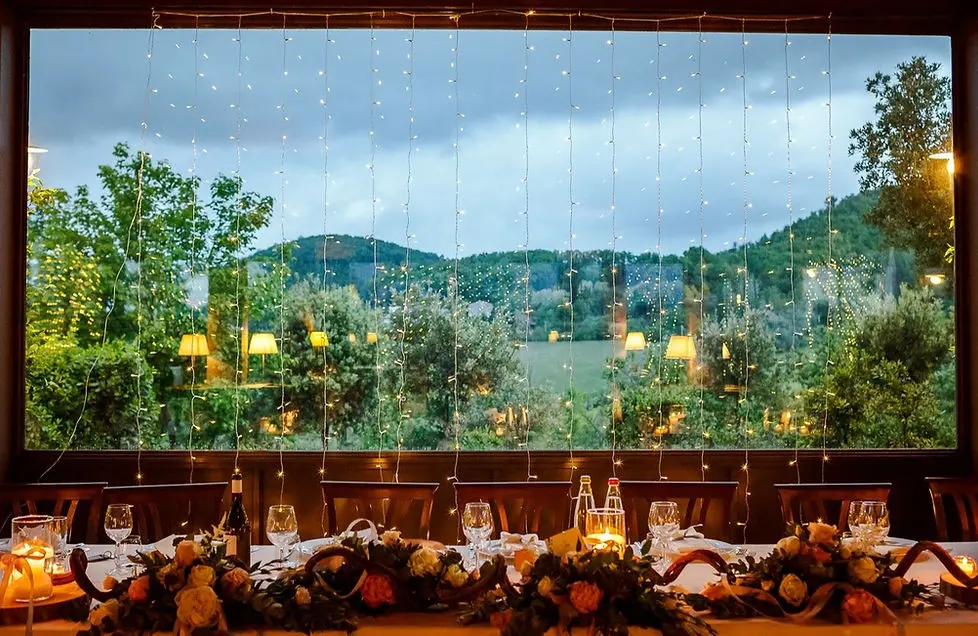
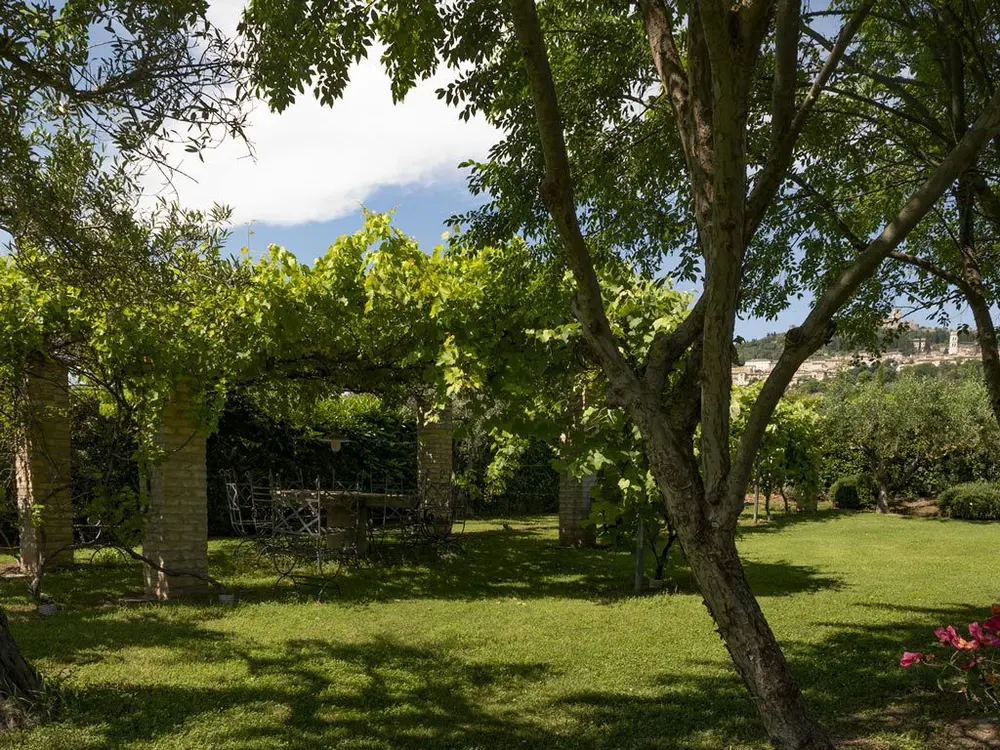
Castello di Petrata, Assisi
Tenuta San Masseo, Assisi
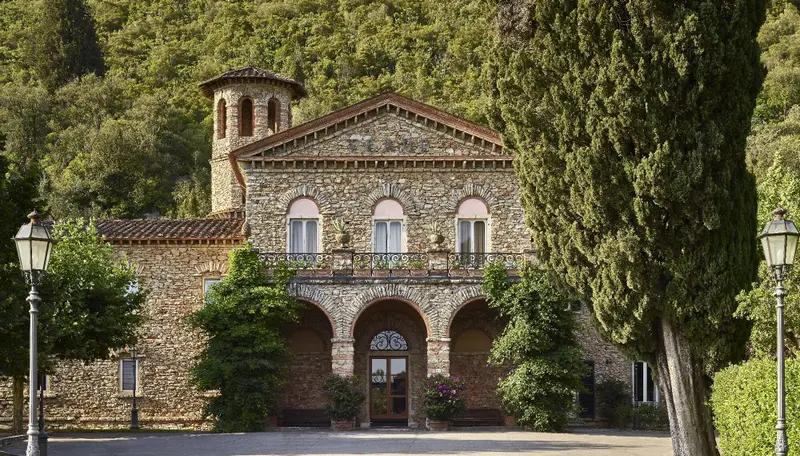
The centre of the region, around the capital Perugia, holds Umbria’s grandest weddings. Castello di Solfagnano, a restored medieval castle a short drive from the city, is the most complete of them: a walled village of courtyards and a frescoed church, formal gardens and a tree-lined avenue the estate calls the Cattedrale dell’Amore, all wrapped in the kind of golden light that makes Umbrian autumns famous. To the south, near Massa Martana, Castello di Montignano is a tenth-century fortress turned Relais and Spa, its stone cloisters and loggias opening onto gardens and a pool above the hills, available on an exclusive-use basis for a celebration that takes the whole castle. These are properties for couples who want a fortress and a feast, and the privacy that comes with taking one entirely.
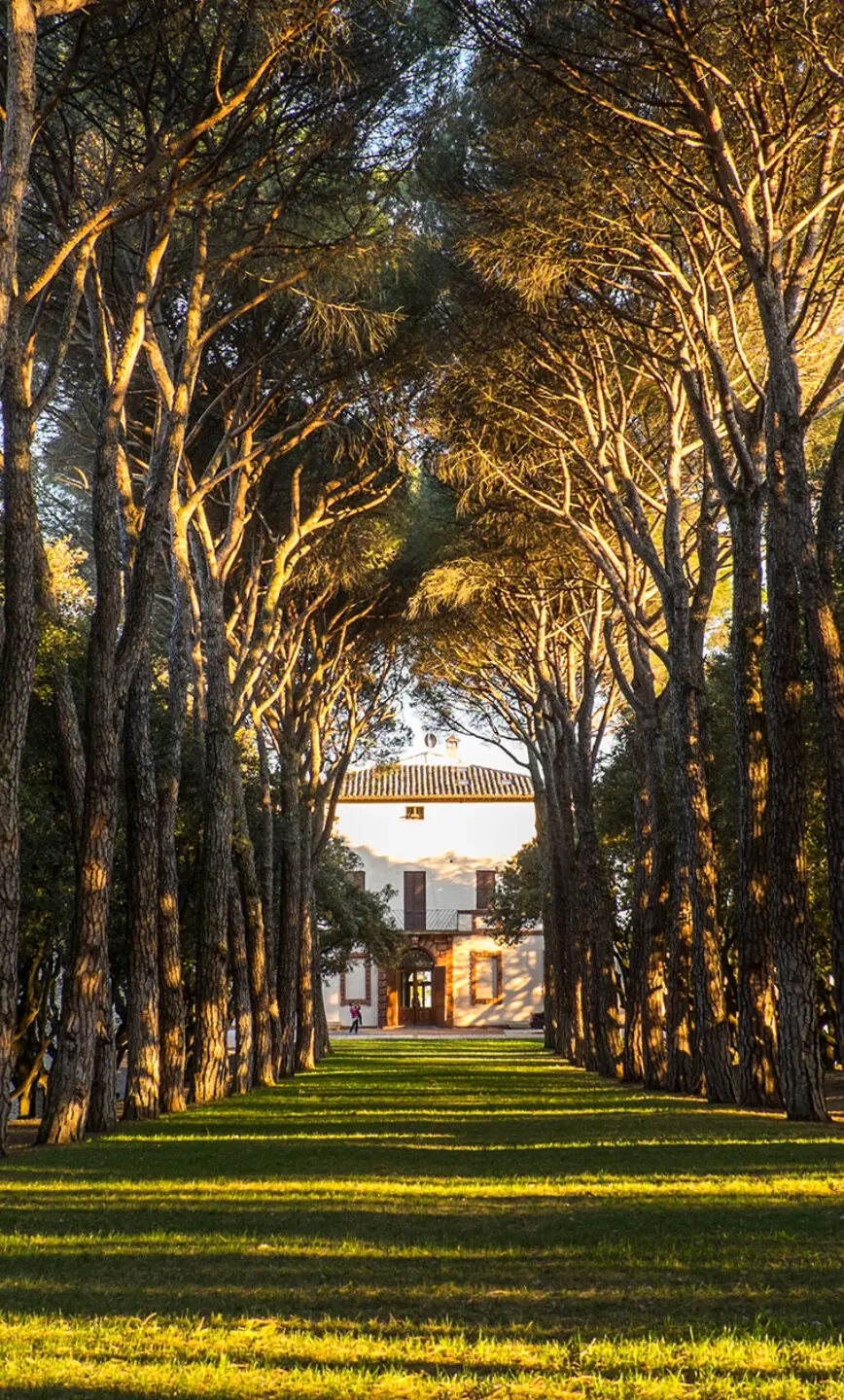
Castello di Solfagnano, Perugia
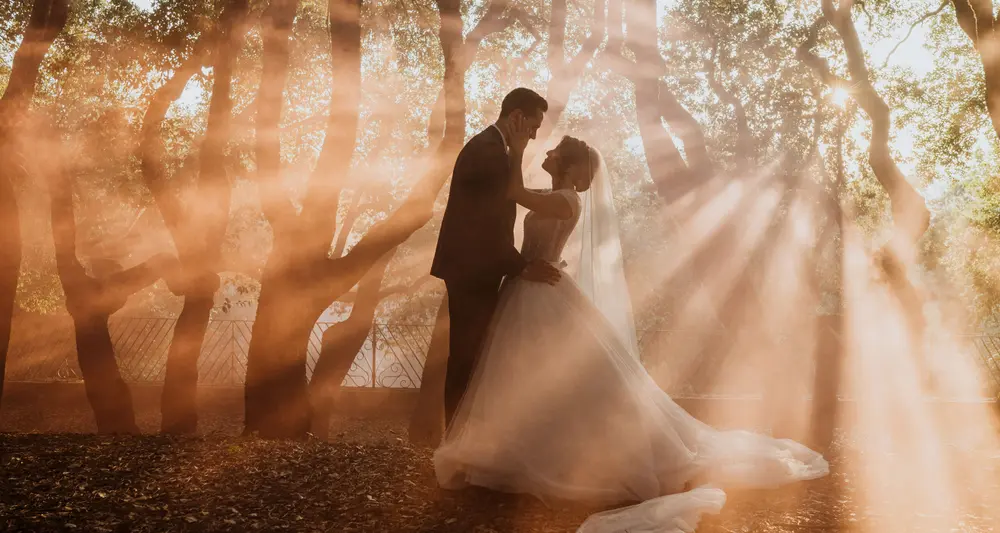
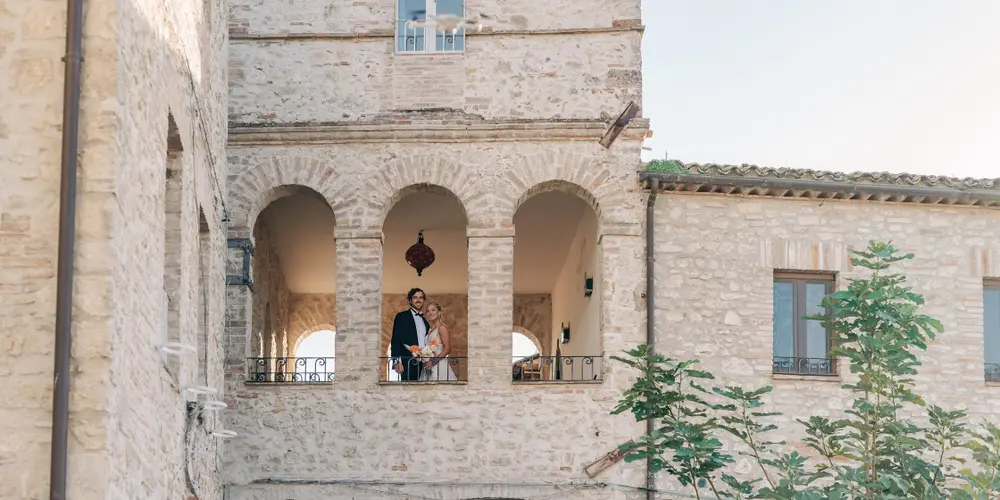
Castello di Solfagnano, Perugia
Castello di Montignano, Massa Martana
The north of Umbria is its wildest and least travelled corner, a country of forested mountains and grey-stone towns, and its great town is Gubbio, a steep medieval city of towers and palaces that feels carved from the rock it stands on. Here Park Hotel ai Cappuccini occupies a seventeenth-century Franciscan monastery, its ancient cloister and the Sala San Nicola opening to a terrace over the city and the green mountains beyond. There is a wellness spa in the old vaults and a restaurant built on Umbrian truffle and Sagrantino. It is a wedding for couples drawn to history and quiet rather than spectacle, with one of the most atmospheric medieval towns in Italy on the doorstep.
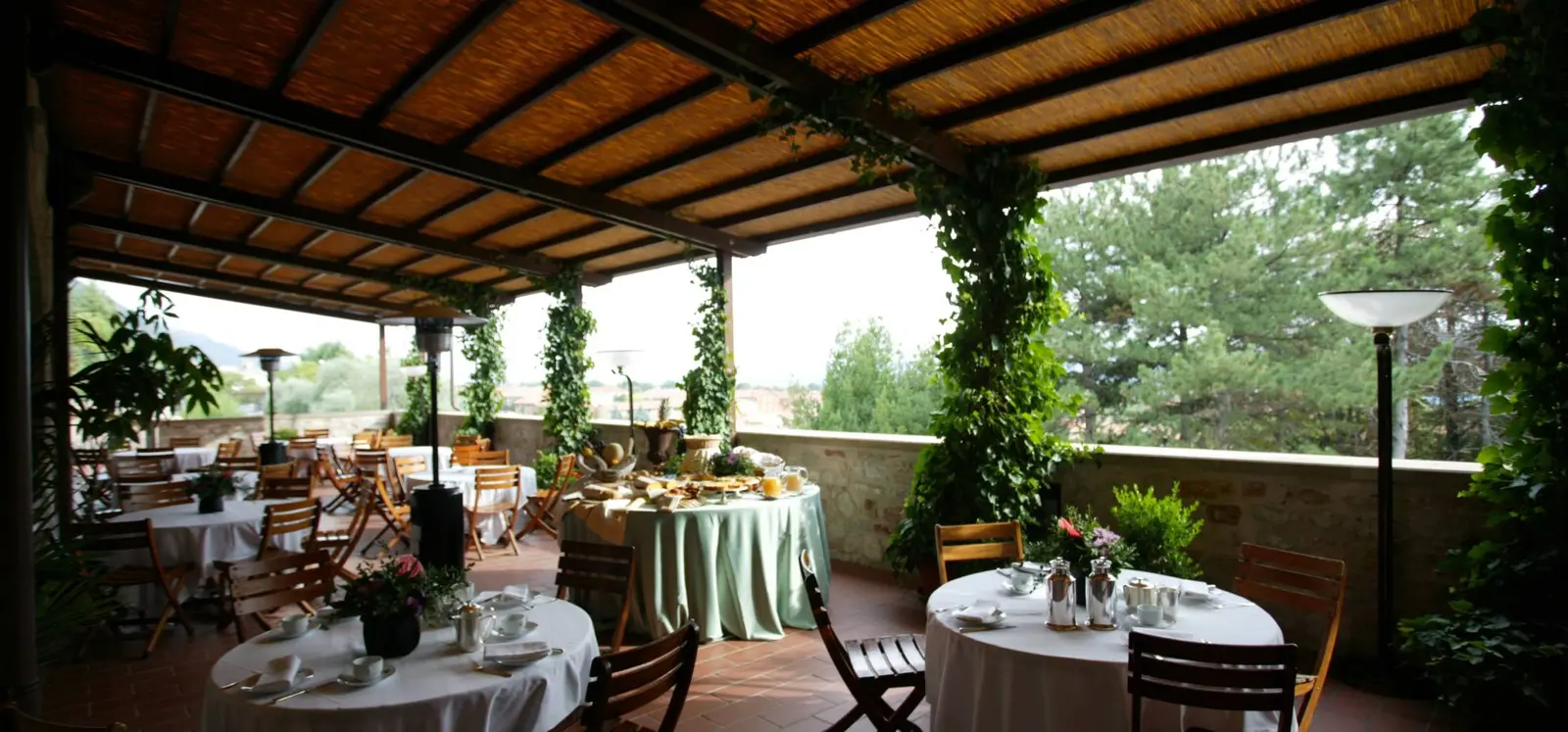
Park Hotel ai Cappuccini, Gubbio
The south of Umbria runs down toward the Tiber and the border with Lazio, softer country of vineyards and oak woods, and its emblem is Orvieto, a golden city set impossibly on a sheer plug of volcanic rock, crowned by one of the great cathedrals of Italy. On a hill facing it, Torre Collevento is a sixteenth-century tower among the vines, taken on an exclusive-use basis, with terraces that frame Orvieto across the valley at golden hour. Deeper into the green hills, San Pietro sopra le Acque is a seventeenth-century convent of cloisters, frescoed porticoes and a sacred wood, where receptions run long under fairy lights with the Umbrian hills falling away below. And toward the Tiber valley, Le Torri di Bagnara sets a private medieval castle and its eighteenth-century church inside a vast nature reserve, for the rare couple who want a whole estate and its forests to themselves.
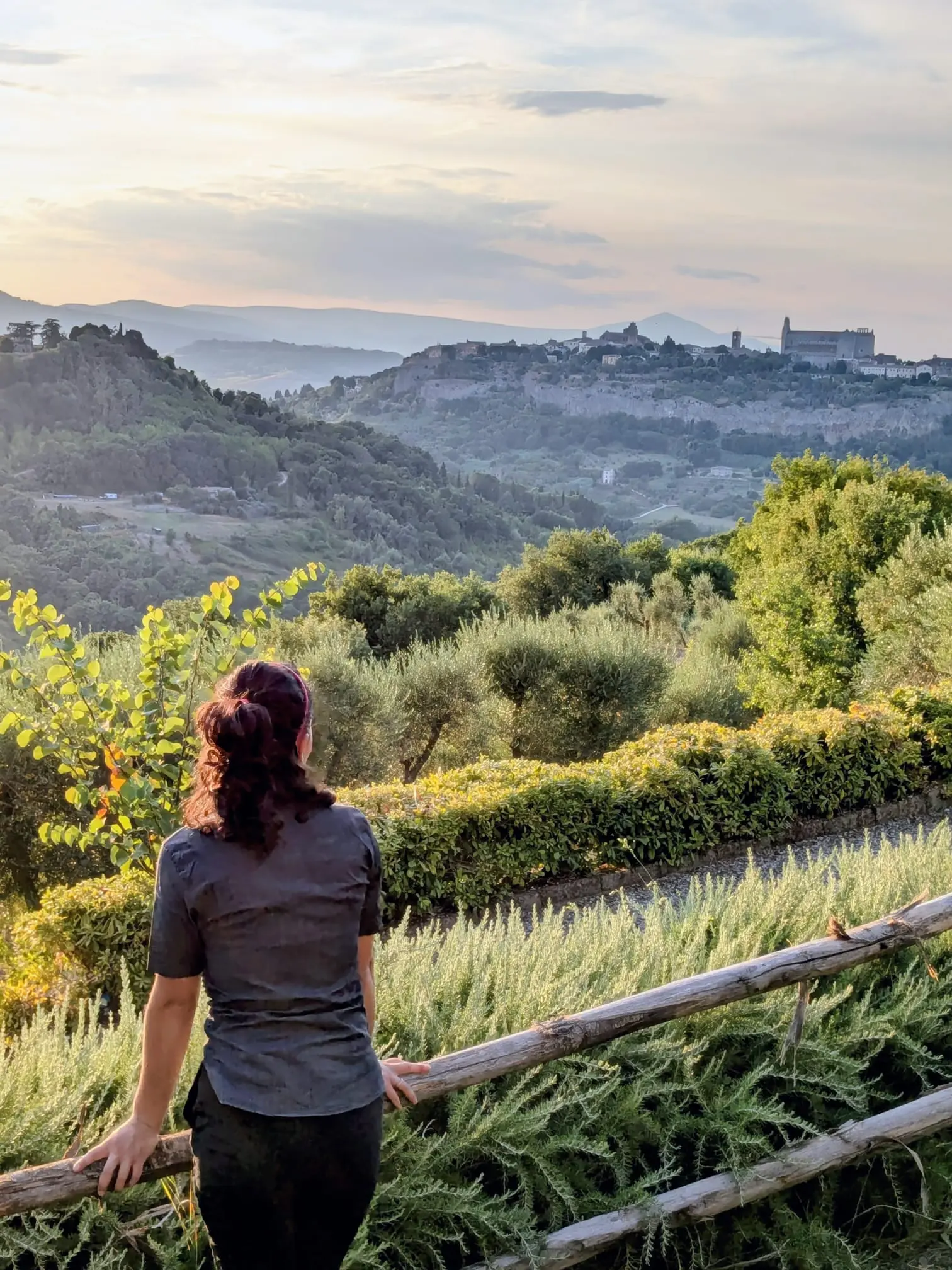
Torre Collevento, Orvieto
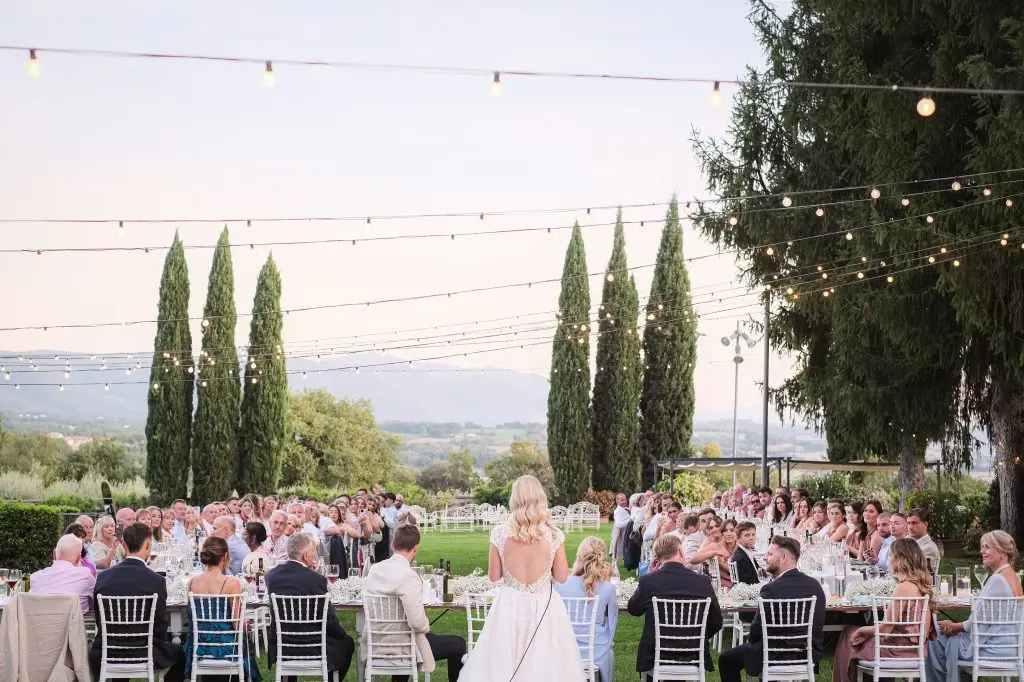
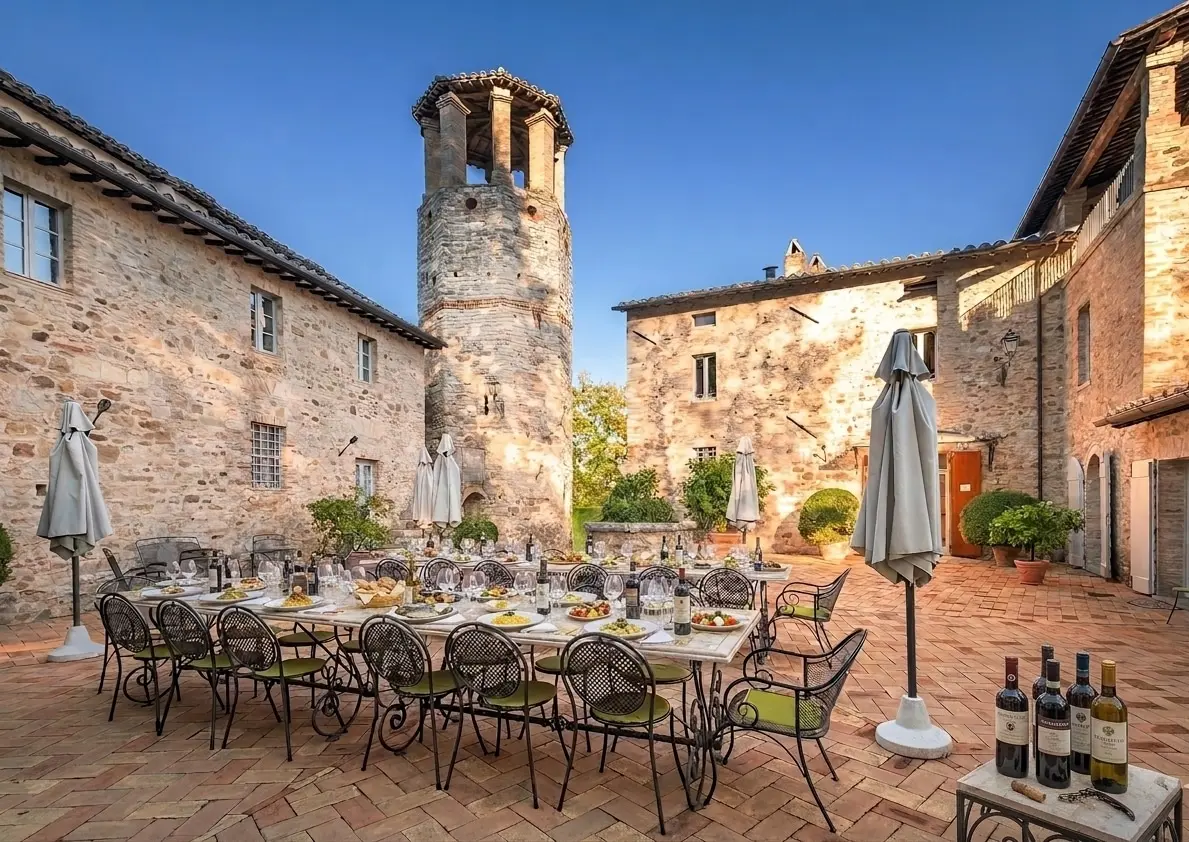
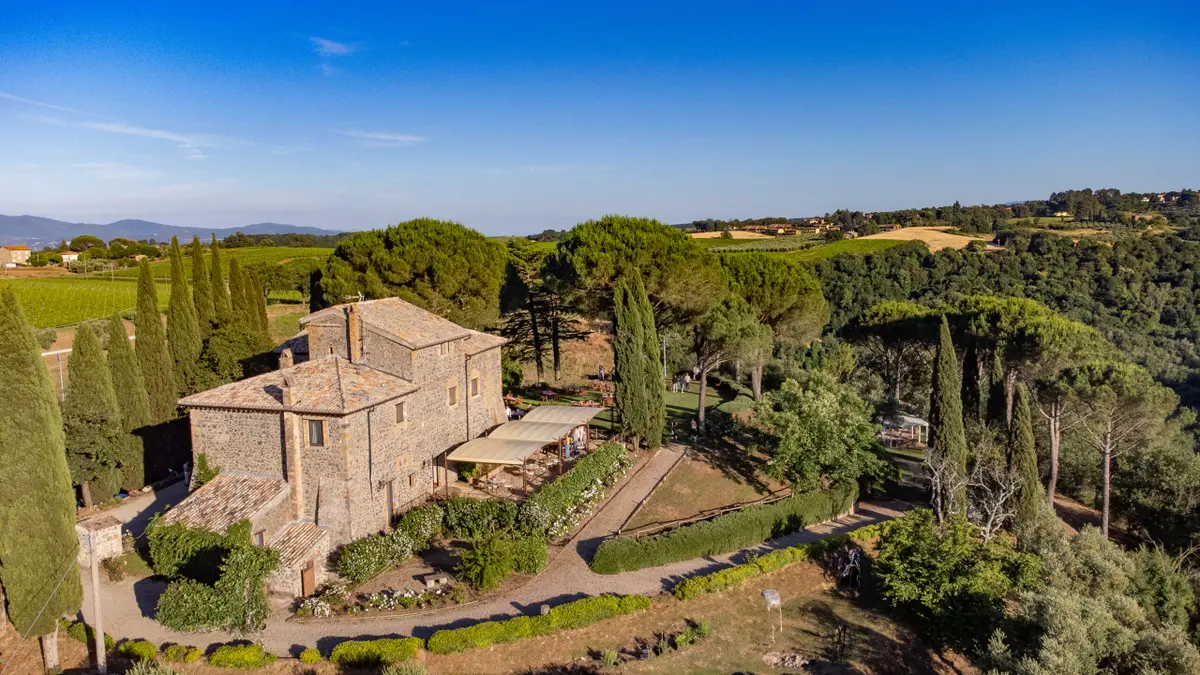
Umbria does not perform. It simply waits, green and quiet and very old, for the couple who wants the celebration to feel like a secret rather than a show.
On marrying in UmbriaUmbria eats from the woods and the hills, and its table is one of the most distinctive in Italy. This is the land of the black truffle, dug around Norcia and shaved over everything from eggs to hand-rolled strangozzi; of norcineria, the art of the pork butcher that the town of Norcia gave its name to; of Castelluccio lentils, wild boar, porchetta turned on the spit, and a green, peppery olive oil that rivals any in the country. A wedding menu here is rustic in the most luxurious sense, built on a few perfect ingredients and the truffle that announces the season.
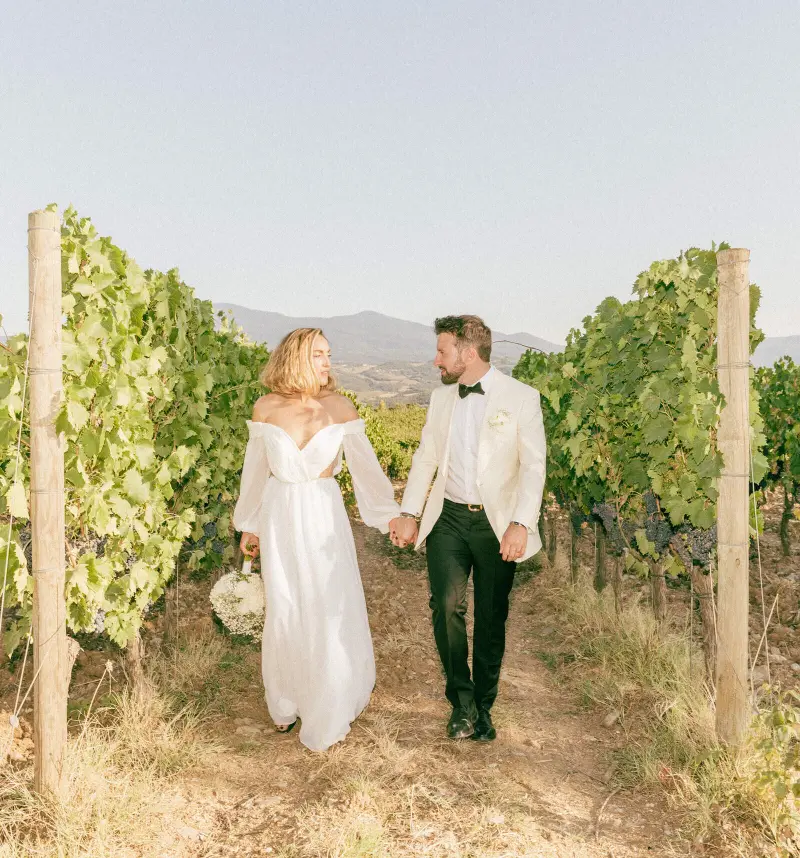
The wine carries the same character. Montefalco gives Sagrantino, a dark, tannic, age-worthy red found almost nowhere else on earth, and the gentler Montefalco Rosso for the table. Orvieto gives its crisp white Classico, and Torgiano its reds. Many Umbrian venues are working estates pressing their own oil and pouring their own labels, so the bottle on the table and the oil on the bread were very often made within sight of it. A good local caterer builds the whole celebration around this, because in Umbria the food is not a backdrop to the wedding. It is part of the place.
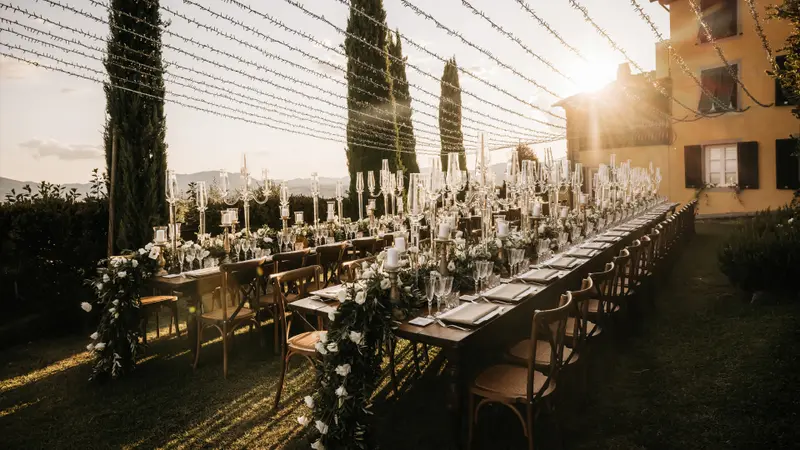
The Umbrian season runs from late April to October, and like Tuscany it rewards the shoulders. May, June and September are close to ideal: warm days, long golden light, the hills at their greenest in spring and most luminous in early autumn, and none of the fierce heat of the inland summer. July and August are hot and still, beautiful but demanding, and best built around the evening. Late September and October bring the grape and olive harvests and the first truffles, and to many eyes the most beautiful light of the year. Whenever you come, the Umbrian day belongs to the evening: vows in the late-afternoon gold, dinner as the hills turn blue, dancing under a sky with very little light pollution to dim the stars.
Umbria is, as a rule, gentler on the budget than Tuscany, one of the real reasons couples choose it. For a wedding of around eighty guests, a realistic all-in figure, venue and catering, flowers and styling, music, planner and photography, begins around €45,000 to €75,000 at a characterful estate and rises through €90,000 to €140,000 for a marquee castle taken on exclusive use, with the grandest multi-day takeovers reaching beyond €180,000. Exclusive-use venue hire typically runs €6,000 to €30,000 depending on the property and the number of nights; catering, the largest line, commonly lands at €150 to €300 per head. The same money simply goes further here than an hour north, which is why a castle wedding in Umbria can feel within reach where its Tuscan equivalent does not.
San Pietro sopra le Acque
Civil weddings are legal and binding across Umbria, conducted in the town halls and licensed venues of the comuni, and some of the settings are spectacular, from the medieval halls of Assisi and Spello to the great civic palaces of Perugia and Gubbio. A number of private estates hold their own civil licence, allowing a legally binding ceremony in the garden or the castle chapel rather than a municipal office; others host a symbolic ceremony, with the legal marriage completed at home beforehand, which frees the celebration to happen anywhere, a cloister, a sacred wood, a terrace over Orvieto. The paperwork for non-Italian couples, the nulla osta and the declarations made at the consulate or comune, is straightforward but unforgiving of haste, and a local planner will confirm which venues are licensed and steer the route that fits your timeline.
Umbria is less saturated with wedding suppliers than Tuscany, which is mostly a virtue and occasionally a caution. The best local planners are deeply rooted, they know which comune licenses which castle, which truffle supplier and which Sagrantino estate, and they are the difference between a wedding that feels effortlessly of the place and one that imports a generic template into it. Because the region is quieter, the strongest dates and the best suppliers go early. Engage a planner who actually lives and works in Umbria, ideally before the venue is signed, and let them open the region’s quieter doors for you.
"You do not so much hold a wedding in Umbria as let the green heart of Italy keep it for you, the basilica on the hill, the truffle on the table, the long blue dusk over the valley."
Every venue named in this guide is part of the Umbria collection on Luxury Wedding Directory, from the hill of Assisi to the castles of Perugia and the estates around Orvieto. Each entry below opens onto a full showcase with imagery, capacities and the means to enquire directly. Begin wherever your Umbria begins.
- Medieval hamlet beneath the Basilica
- Thirteenth-century fortress, Assisi
- Exclusive-use olive estate, Assisi
- Castle village, near Perugia
- Tenth-century fortress Relais & Spa
- 17th-century monastery, Gubbio
- 16th-century tower, Orvieto
- 17th-century convent estate
- Private castle in a nature reserve
Drawn to Italy more widely? Read Getting Married in Tuscany for the region to the north, The Art of the Amalfi Wedding for the coast, and Beatrice & Marco: A Lake Como Love Story for the lakes.